Waxy and Starchy Potatoes Are Not Substitutes, and the Bag Rarely Says Which Is Which
One kind holds its shape and one kind falls apart, and which one you have decides whether the potato salad is a salad or a mash. The label almost never tells you, and the test takes ten seconds.
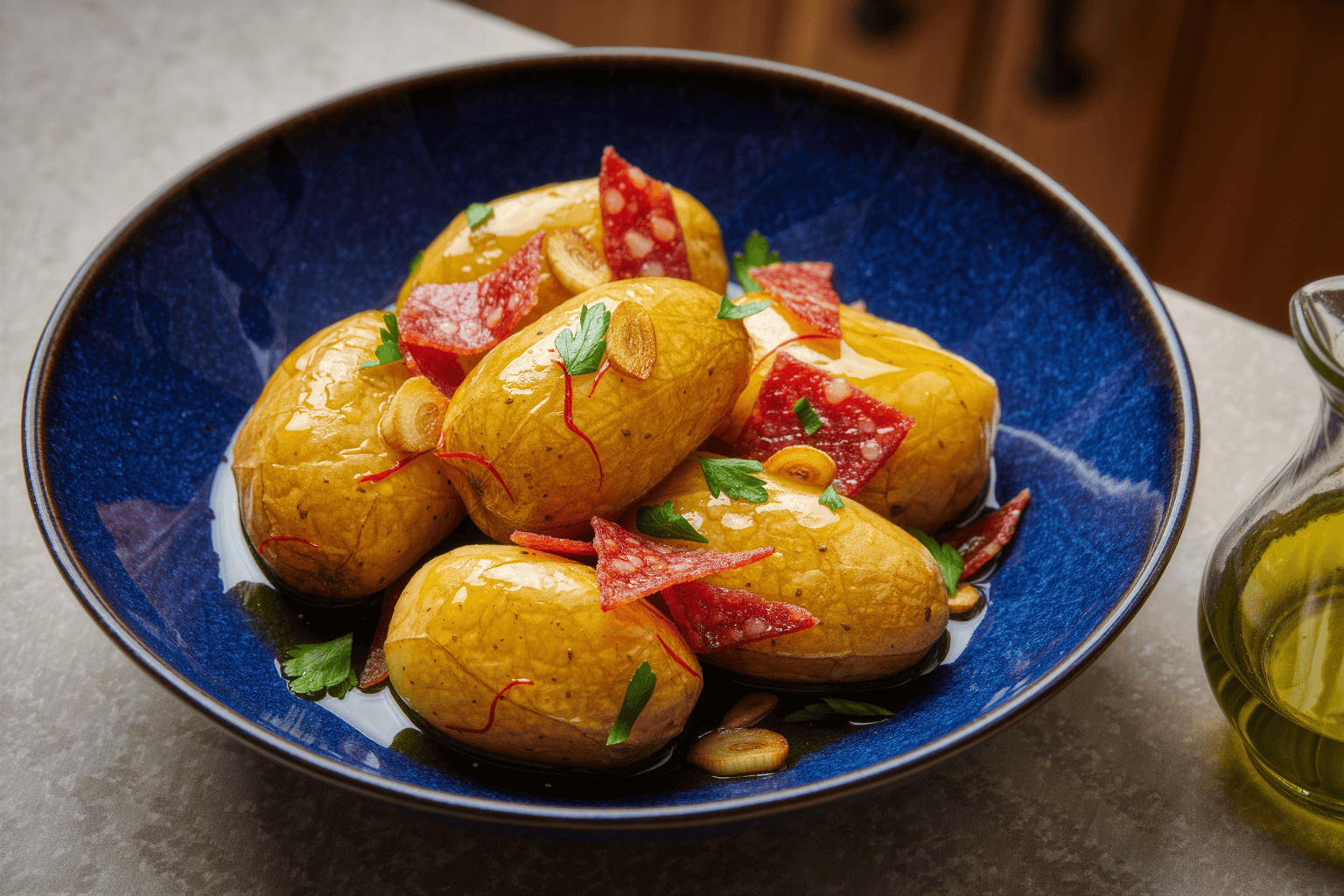
The potato salad fell apart. The mashed potatoes are gluey. The gratin is soupy and the roast potatoes are pale. All four are the same mistake: the wrong kind of potato, bought from a bag that said nothing useful about which kind it was.
There are really only two categories, the difference between them is large, and almost nothing else about potato cooking matters as much.
Starch content decides whether it holds together
A high-starch potato — russet, Idaho, most baking potatoes — has large starch granules packed loosely in cells with relatively little holding them to each other. Cooked, those granules swell with water and the cells separate. The result is dry, fluffy, and structurally willing to come apart.
A low-starch, waxy potato — new potatoes, fingerlings, red-skinned, most small round ones — has less starch, more sugar, and cells that stay bonded. Cooked, it stays in slices. It is denser, moister and slightly sweet.
Yukon Gold and its relatives sit in between, which is why they are the most commonly recommended potato and also the reason a recipe that says all-purpose is quietly admitting it does not matter much for that dish.
The ten-second test
Since the bag usually says only the color, there are two ways to find out.
Cut one and look at the cut face after a minute. A starchy potato weeps a cloudy, chalky liquid and the surface goes matte and dry-looking. A waxy one stays wet and glossy.
Or dissolve a couple of tablespoons of salt in a cup of water and drop the potato in. Waxy potatoes are less dense and tend to float; starchy ones tend to sink. It is not laboratory-grade but it settles an argument.
What each one is for
Starchy: mashing, baking whole, French fries, gnocchi, anything where fluffy and dry is the goal. Also the better roasting potato, because a dry interior lets the outside crisp rather than steam.
Waxy: potato salad, gratins, stews and soups, boiled and buttered, anything sliced that has to stay sliced. The cells hold, so the potato is still a potato after forty minutes in a braise.
In between: roasting, which either will do, and mashing if you want something denser and more buttery than a russet gives.
Using the wrong one is not a small difference. Waxy potatoes mashed go elastic and gluey, because the intact cells have to be ruptured to get smooth and rupturing them releases free starch. Starchy potatoes in a stew dissolve into the liquid, which thickens the stew and removes the potato from it.
Gluey mash is a mechanical problem, not a ratio problem
Mashed potatoes go gluey when starch granules are broken open and their contents released into the mix. Which means the enemy is agitation, not quantity.
A food processor or a blender is the worst possible tool and produces something closer to wallpaper paste. A ricer or a food mill is the best, because it presses the cooked cells through without shearing them. A hand masher is fine. An electric mixer is a risk taken.
Two other things help. Cook them in large pieces or whole so less surface is exposed to the water — a potato boiled in small cubes is a waterlogged potato. And add warm dairy, because cold butter and cold milk force you to work the mash longer to incorporate them, which is more agitation.
Crisp roast potatoes are a surface-area problem
The standard good-roast-potato method is three separate interventions and each one has a reason.
Parboil first, which cooks the interior and, more importantly, gelatinizes the starch at the surface. Then rough them up — shake the colander, bash them about — which breaks that gelatinized surface into a fuzzy, irregular layer with vastly more surface area than a smooth cut face has. Then into hot fat in a preheated pan with space around them.
The fuzzy surface is the whole trick. It is a pre-made crust waiting for heat, and it is why a bashed potato comes out shattering and a neatly cut one comes out merely browned.
A little baking soda in the parboiling water speeds this up considerably, because an alkaline environment breaks down pectin and gives you more of that surface mush — the same lever that accelerates browning in onions, with the same caution about using too much.
Cold water, salted water, and why the starch gets rinsed
Start potatoes in cold water and bring them up together, so the outside is not overcooked by the time the center is done. It is the same reasoning as any thick thing: the surface and the center want different amounts of time, and a gentle ramp narrows the gap.
Salt the water properly. Potatoes are bland and absorbent and this is the one chance to season the inside.
And rinse the cut surfaces when you want crisp and separate — fries, hash browns, rösti — because free surface starch is glue. Do not rinse when you want them to hold together or to thicken something, which is the whole reason a gratin works without a roux: the potatoes are releasing starch into the cream on purpose.
Refrigerating them is the one storage mistake
Cold converts potato starch into sugar. A refrigerated potato is sweeter, and it browns much faster and darker — a nuisance when roasting and a real problem when frying, because the extra sugar drives more of the reactions that happen in very dark frying.
A cool, dark cupboard, not the refrigerator, and not next to the onions, since each shortens the other’s life.
Light turns the skin green, which is chlorophyll and harmless, but it tracks with the production of solanine, which is bitter and not. A little green skin can be peeled off. A potato that is green through or tastes bitter should go.
Cooked and cooled is a different ingredient again
A cooked potato that has gone cold has retrograded starch — the same process that makes bread stale and day-old rice fry better. It is firmer, drier and holds its shape far better than it did hot.
Which is why potato salad is made from cold potatoes and why hash browns work better from yesterday’s boiled ones. And it is why a cooked potato is one of the more useful components to have in the refrigerator: it starts as a side dish and ends up as a hash, a soup, a salad or the body of a frittata.
Dress them while they are still warm, though. A warm potato absorbs vinaigrette and a cold one lets it run off, which is the one step in potato salad that cannot be done later.
Part of Recipes & Technique.


