Eat This First: The Leftover Queue That Keeps Good Food From Dying in the Back Row
When several leftovers are competing for the same week, do not work through them randomly. Build a simple queue around safety, quality, next use and freezer decisions so the fragile food gets eaten before the durable food becomes another deadline.
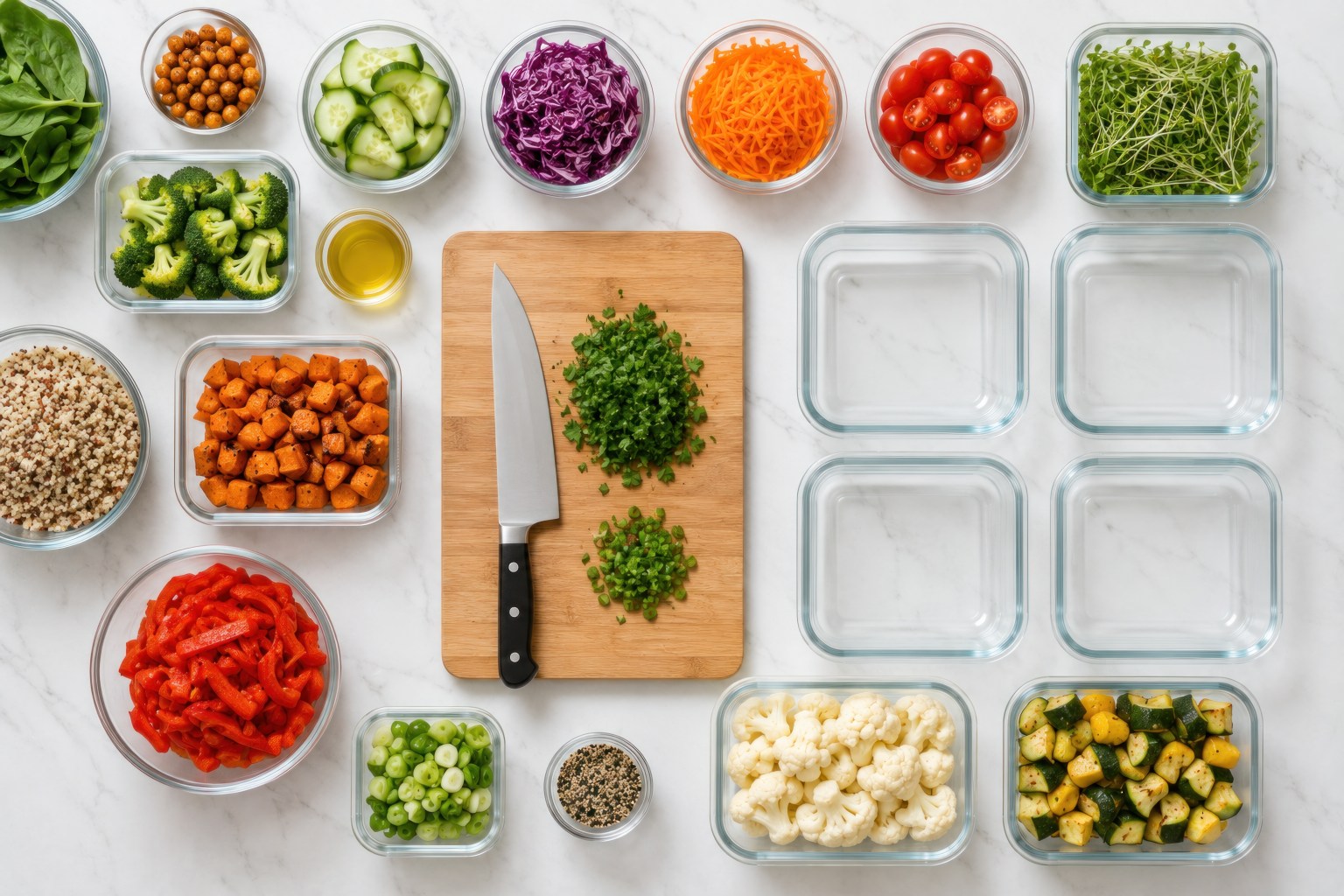
By Wednesday, the refrigerator can contain five perfectly reasonable foods and absolutely no useful sense of order.
Half a roast chicken. Rice from Monday. A container of braised beans. Roasted vegetables. A little dressed salad nobody was emotionally prepared to throw away.
All of it is technically leftover. None of it deserves the same place in line.
This is the point where a good leftover plan can quietly fail. We know how to store the food. We know what it is. We may even have ideas for it. But we keep choosing dinner by appetite alone until the fragile thing is sad, the durable thing has become urgent, and Thursday turns into a small archaeological project.
The fix is not a color-coded refrigerator.
It is a queue.
Safety and quality are two different clocks
The first clock is safety. It is not negotiable.
USDA guidance says perishable leftovers should be refrigerated or frozen promptly, generally within two hours, or within one hour when exposed to temperatures above 90°F. Cooked leftovers are generally used within three to four refrigerated days or frozen for longer storage. If a particular food has a different recommended storage time, use that food-specific guidance; FoodSafety.gov’s Cold Food Storage Chart and USDA’s FoodKeeper are useful when the answer is not obvious.
The second clock is quality.
That clock is much more personal and much more interesting.
Dressed greens may be safe tomorrow and still not be something you want tomorrow. A crisp potato loses the reason you liked it long before a braised bean forgets how to be a bean. A piece of roast chicken may have several credible next jobs; a delicate fried garnish has perhaps one optimistic morning.
The leftover queue begins by respecting both clocks without confusing them.
THE LEFTOVER QUEUE
First: anything with uncertain handling history leaves the conversation. Safety is the veto.
Next: food whose quality is declining fastest and cannot be rescued by freezing or transformation.
Then: food with a named meal in the next day or two.
Freeze now: durable, valuable portions that do not have a near-term job.
Last: the foods that genuinely tolerate waiting well. They are not being neglected. They are buying everybody else time.
The leftover queue, in order
- FirstAnything with an uncertain handling history leaves the conversationSafety is the veto and it does not get a hearing
- NextThe food whose quality is falling fastestFreezing and transformation cannot rescue this one, so it goes now
- ThenFood with a named meal in the next day or twoA named dinner outranks a vague intention every time
- Freeze nowDurable, valuable portions with no near-term jobFreezing early beats keeping something cold purely because it cost money
- LastThe foods that genuinely tolerate waitingThey are not being neglected. They are buying everybody else time.
Eat the food that gets worse fastest, not the food you notice first
Refrigerator visibility is a terrible scheduling system.
The container in front gets eaten. The container behind it becomes a surprise. The opaque container becomes a legal mystery. The bowl covered with foil enters another dimension entirely.
Instead, look for quality urgency.
Dressed salad is already changing. Crisp coatings are absorbing moisture. Fresh herbs mixed into warm food are not improving with age. Bread already soaked in sauce has made a decision you cannot reverse.
Those foods belong earlier in the week if you genuinely want them.
Braised meat in its liquid, soup, beans, sturdy cooked grains, and many roasted components often have more flexibility. That does not mean they can live in the refrigerator indefinitely. It means they may be better candidates for a later slot inside the same safe storage window, or for the freezer if the week is already full.
The queue is not about declaring one food universally more perishable than another. It is about noticing which food loses the experience you cared about fastest.
A named dinner outranks a vague intention
Suppose the refrigerator holds cooked rice, roast chicken, and braised beans.
The chicken already has a job: cold noodles tomorrow.
The rice already has a job: fried rice Wednesday.
The beans have no appointment.
That is useful information.
The chicken and rice are not merely leftovers anymore. They are scheduled ingredients.
The beans now have a decision to make. Will they become toast or soup inside the next few days? If yes, give them a slot. If not, and they freeze well in the form you have them, move them out of the refrigerator before they become an emergency.
“We will eat it sometime” is not a queue position.
It is how good food spends three days waiting for a meeting that was never put on the calendar.
Do not force the most expensive food to go first
Cost matters. It just does not automatically decide order.
A beautiful braise may be the most expensive thing in the refrigerator and still be a better freezer candidate than tonight’s fragile vegetables.
Protecting value sometimes means eating the delicate thing and freezing the expensive thing.
This is especially true when the expensive component has already done the hard work.
Braised meat, stock, cooked beans, sauces, roast meat, and other substantial components can carry a lot of labor. If they have no believable place in the next few dinners, freezing that work early can be smarter than keeping it refrigerated simply because it cost more.
Freeze It Tonight, Not Friday exists for exactly this problem.
The queue changes when texture can be restored
A food that looks urgent may not be as urgent if you already know how to bring it back.
Cold roasted potatoes are not doomed if tomorrow includes a hot sheet pan or skillet. Cooked rice is often more useful cold than freshly steamed if fried rice is the plan. A braise may reheat beautifully because moisture is part of its structure.
On the other hand, a delicate fried coating that has gone soft may have no convincing route back to its original self.
That does not necessarily mean throw it away. It means stop pretending its future job has to be a reenactment.
The Reheat Problem sorts food by what went wrong: crisp food needs dry heat, dry food may need moisture, delicate food may need minimal heat, and some things are better transformed than reheated.
The queue gets smarter when it knows which losses are reversible.
If there are two people in the house, the queue matters even more
Two-person households can create a refrigerator full of perfectly respectable partial quantities.
None of them looks enormous. Together they can occupy the entire week.
That is when “we only have a little left” becomes a trap.
A little rice. A little chicken. A little roasted squash. Half the beans. Some sauce. Suddenly four nights have already been spoken for and nobody remembers agreeing to this.
The answer is to schedule only the portions that actually belong this week.
If Tuesday is chicken noodles and Wednesday is fried rice, the later bean portion can freeze. If Thursday is already dinner out, do not leave Thursday’s food in the refrigerator because the calendar feels theoretical.
Cooking for Two Without Eating the Same Dinner Four Nights is built around this exact restraint: one substantial cook can buy several dinners without requiring those dinners to happen consecutively.
Hosting creates a bigger queue, not a different problem
After a party, the refrigerator may contain leftovers from six dishes at once.
Exhausted hosts make completely understandable decisions at this hour, such as putting every platter into cold storage and promising to think tomorrow.
Tomorrow, unfortunately, has its own plans.
Before cleanup ends, decide which food is truly being kept, what actual quantity remains, which portions have a credible next job, and which later portions should freeze.
Food that spent too long outside safe holding conditions does not enter the queue at all.
Food being sent home with guests gets its own path.
What Occasion Should Remember About Tomorrow’s Dinner handles that event-to-kitchen handoff in detail.
The calendar should hold meals, not containers
I do not think anybody needs a refrigerator management system that feels like enterprise software.
A small note is enough.
Tuesday: chicken noodles.
Wednesday: fried rice.
Beans: freeze.
Salad: lunch tomorrow or let it go.
That is already more useful than six labels that say what the food is but not why it still exists.
If you do label containers, attach the future job when you know it. “Chicken — noodles Tues.” “Rice — fried rice Wed.” “Beans — freeze.”
A date tells you when the food started.
A job tells you why you are keeping it.
You want both.
Do not save a food from the queue by inventing a complicated recipe
Leftover virtue gets expensive fast.
You notice the roasted vegetables are losing their charm, so you find a recipe requiring pastry, goat cheese, two herbs, a specialty condiment, and a forty-five-minute drive.
We have now spent fifty dollars rescuing six dollars of vegetables.
No.
If a short bridge can redirect the food, use it. Acid, crunch, bread, tortillas, noodles, eggs, herbs, cabbage, yogurt, a useful sauce. The Leftover Bridge is built around keeping that second shopping list short.
If the rescue becomes more work than the original food is saving, the queue has become a hostage situation.
Some food should leave the queue entirely
Not because it is unsafe.
Because nobody wants it, the quantity is useless, the texture is gone, or the second job requires more effort than the food is worth.
Not Every Leftover Deserves a Container is the permission structure here.
Saving everything is not the same as wasting nothing.
Sometimes it means storing low-value food until it becomes lower-value food.
The queue only works if it is allowed to be edited.
Do a sixty-second queue when you close the kitchen
Not a spreadsheet.
Not Sunday meal prep with matching labels and a label maker that has somehow become management.
Just decide what is first, what already has a job, and what is leaving for the freezer.
If tomorrow’s lunch should take the fragile food, pack it now.
If Tuesday’s dinner needs twelve ounces of chicken, reserve it now.
If the beans belong next week, freeze them now.
If the salad is never going to be eaten, stop giving it refrigerator tenure.
The reward is not a perfectly optimized refrigerator.
It is getting to Wednesday without discovering that the dinner you actually wanted is trapped behind three meals you were supposed to eat first.
Part of Planned Leftovers and The Menu That Behaves. Build the quantity before the queue with The Leftover Allocation Rule, and move anything that does not belong this week to Freeze It Tonight, Not Friday.
Part of Kitchen Systems.
Where this goes next

