A Great Deal of What Is Sold as Fresh Fish Was Frozen, and That Is Good News
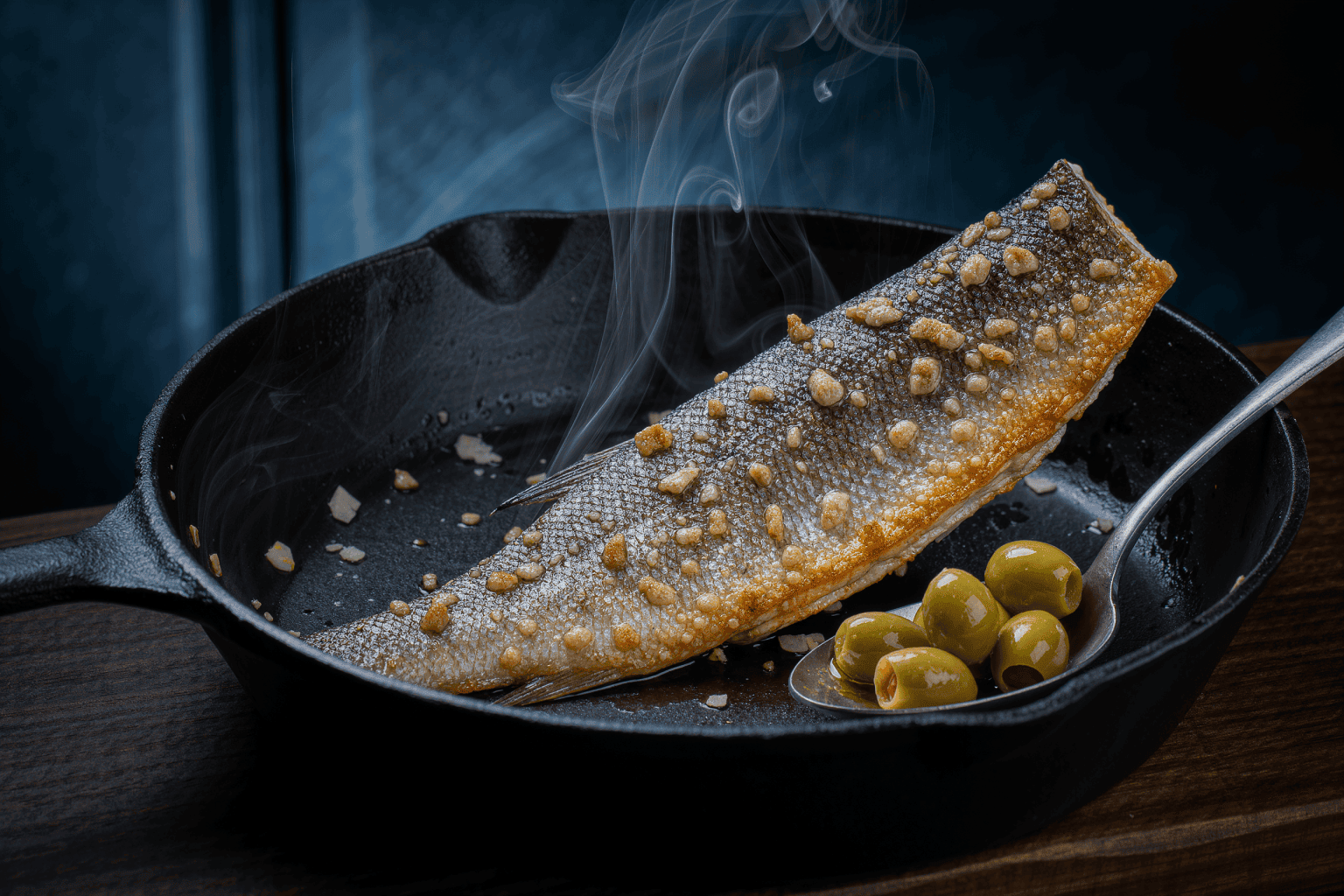
The fish counter is the part of the shop people are most nervous about and least equipped to judge, and the nervousness is aimed at the wrong thing. The question that matters is almost never fresh or frozen. It is how long ago, and how cold since.
A large share of what lies on the ice was frozen at some point between the boat and the counter, including most of the shrimp and a good deal of the tuna and salmon. Thawed fish sold on ice is legal and normal nearly everywhere and is frequently the better product. The word fresh, on a fish, is doing far less work than shoppers assume.
Fish spoils faster than meat, and the reason is chemistry
Two things work against it.
Its fats are highly unsaturated, which is what makes them good to eat and also what makes them oxidize quickly. That oxidation is the source of the smell everybody recognizes, and it runs at refrigerator temperature.
And its enzymes evolved in cold water, so they keep working at temperatures that largely stop the enzymes in land animals. A refrigerator is a cold environment for beef and a fairly mild one for cod.
Which means the clock on fish is measured in days rather than the week or more a cut of beef tolerates, and every hour above properly cold costs more than the same hour would cost anything else in the bag.
Frozen at sea is often better than fresh at the counter
Fish frozen on the vessel within hours of being caught, at temperatures far below a domestic freezer, is arrested almost at its peak. It thaws close to what it was.
Fish landed, boxed, trucked, distributed and displayed has spent several days above freezing, all of it on that fast clock. It has never been frozen and it may be considerably older than the frozen block.
So the honest comparison is not fresh against frozen. It is four days old against four hours old, and the frozen one usually wins. Freezing does real damage to cell structure, but commercial freezing is fast enough that the crystals stay small, and the damage it does is smaller than four days of enzymes and oxidation.
Sushi-grade is not a grade, it is a freezing history
There is no official standard behind the phrase. What sits behind the practice is that regulations in the United States and Europe require fish intended to be eaten raw to have been frozen first, at specified temperatures for specified times, to kill parasites — with narrow exceptions for certain farmed and large species.
So a fish being safe to eat raw usually means it was frozen properly, not that it was never frozen. It is worth knowing because it removes the last reason to treat frozen as the lesser option.
What to actually look at, in order
Smell first, and this is the one that matters. Fresh fish smells of very little, or faintly of the sea. Anything sour, or with an ammonia note, is finished. No other sign overrules this one.
Then the flesh. It should look wet rather than dry, translucent rather than chalky, and hold together rather than gaping between the muscle blocks. A fillet lying in a pool of its own liquid has lost the moisture it was going to cook with.
Whole fish give more information: clear rather than sunken eyes, gills that are red rather than brown, and flesh that springs back. They also keep better than fillets, because the skin and the intact shape protect everything underneath, and one decent-sized whole fish is more than one dinner.
And ask when it came in. The person behind the counter will usually tell you, and the answer is more useful than everything above.
Buying frozen well
Look for individually frozen portions rather than a solid block, which lets you take out what you need.
Avoid packets with ice crystals inside or frost on the fish, both of which mean it thawed and refroze somewhere in the chain. Check for a dry, greyish, matted surface, which is freezer burn from air contact and does not recover.
And note that oily fish has a much shorter frozen life than lean fish — two or three months against six or more — because the fat is what oxidizes. Salmon and mackerel are on a shorter clock than cod and haddock even at the same temperature.
Thawing it is where most home damage happens
Overnight in the refrigerator, on a rack over a plate so it is not sitting in the liquid it releases. Never on the counter and never in warm water.
One specific warning is worth repeating because it is counterintuitive: take vacuum-packed fish out of its packaging before thawing. The airless environment inside the bag, at refrigerator temperature, is exactly the condition a particular dangerous bacterium favors, and the packet instructions usually say so in small print that nobody reads.
Once thawed, pat it dry and salt it lightly a few minutes before cooking. Salt draws moisture to the surface first and firms the proteins after, and fish that has been frozen releases more water than fish that has not, which is the single biggest reason it fails to brown.
Cook it knowing what it is
Previously frozen fish has slightly weakened cell structure, which makes it more fragile in the pan and more prone to flaking apart. It suits methods that do not require it to hold together under a spatula: roasting, poaching, a hot pan skin-side down and left alone, anything in a sauce.
And the doneness window is narrow regardless. Fish connective tissue gives up at a far lower temperature than meat’s, so there is no forgiving braise range to aim for; a minute past correct is a different texture. A dry surface and a hot pan are the whole technique for the skin, and the rest is arithmetic about thickness.
The buying rule that follows from all of it
Buy fish on the day you intend to cook it, or buy it frozen and keep it frozen until the night before.
Two days in a domestic refrigerator is a meaningful fraction of a fish’s usable life and it is exactly the gap most shopping habits create. Fish on a weeknight is easier to get right when the fish came out of the freezer than when it came out of the shop on Saturday and has been waiting since.
Which reverses the usual instinct in a useful way. The freezer is not where fish goes when the plan falls through. It is where fish is supposed to be until the plan is real.
Part of Recipes & Technique.


