A Grill Is Three Different Cooking Methods and Most People Only Ever Use One
Treated as a very hot pan that lives outdoors, a grill can do exactly one thing well and ruins everything thicker than an inch. The fix is not technique. It is moving half the fire to one side.
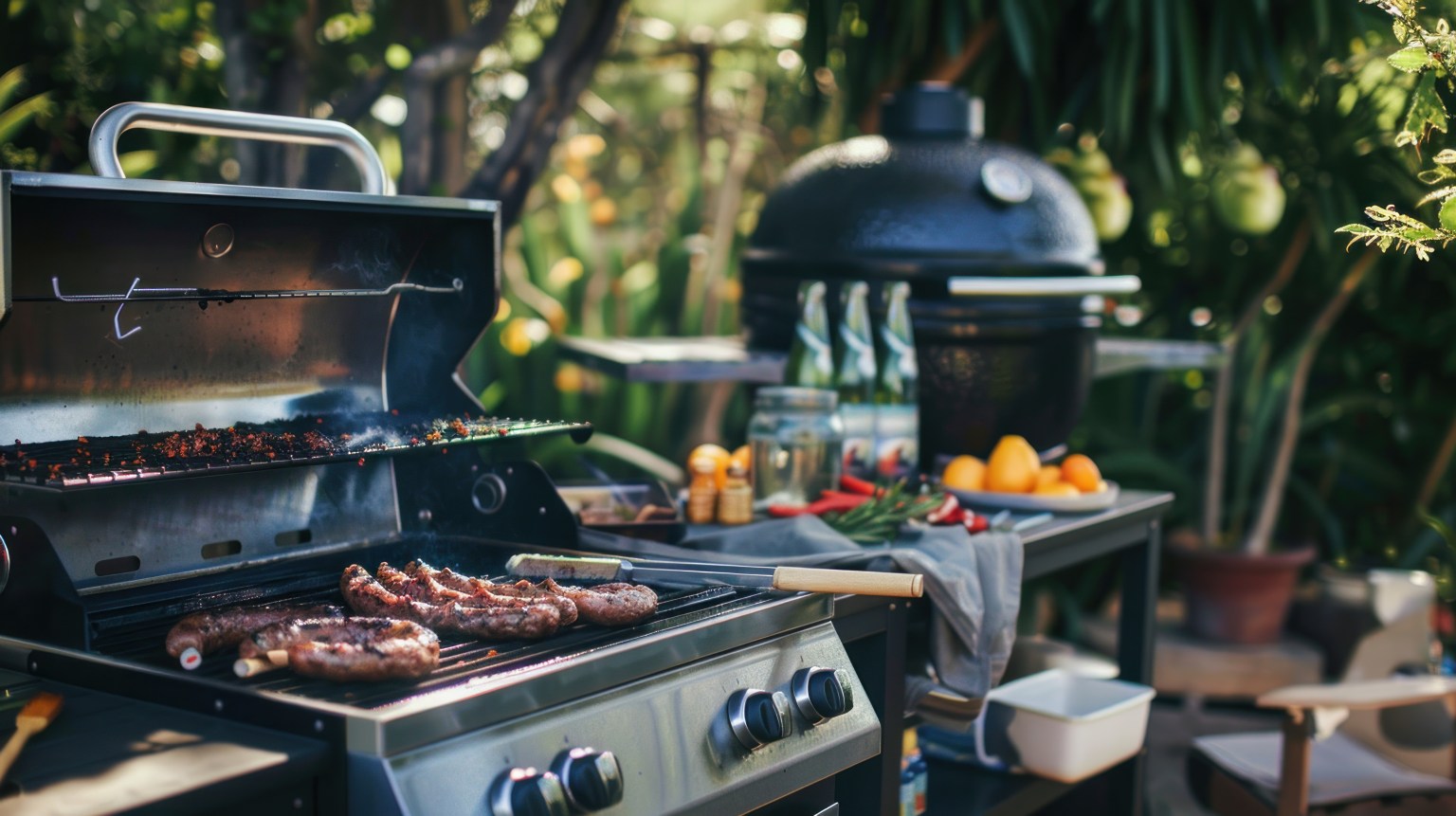
Most home grilling is one method repeated: get it as hot as possible, put everything on, turn it once, take it off. That method is excellent for a hamburger and increasingly bad as the food gets thicker, which is why so many people own a grill and cook only three things on it.
A grill is actually three separate cooking environments, and the difference between them is not technique or skill. It is where the fire is, and whether the lid is down.
Direct heat is a very hot pan, and it has a thickness limit
Food over the fire is cooked by radiant heat from the coals or burner and by conduction from the bars it touches. It is intense, it is fast, and it is almost entirely a surface event.
That makes it the right tool for anything thin enough that the outside and the inside finish at the same time — burgers, thin steaks, shrimp, sausages that were precooked, vegetables cut for it, flatbread.
And it makes it the wrong tool for anything thick, for the reason that runs through all high-heat cooking: conduction time scales with the square of thickness, so the center of a thick piece takes disproportionately longer than the surface can survive. What you get is a black crust, a wide gray band of overcooked meat underneath it, and a raw middle. Three failures from one decision about where to put the food.
Indirect heat is an oven, and it is the method nobody uses
Put the fire on one side, the food on the other, and close the lid, and the grill stops being a pan and becomes a convection oven. Hot air circulates, the food cooks from all directions, and the surface is no longer being blasted.
This is roasting, and it is how every thick thing on a grill should be cooked: a whole chicken, a pork shoulder, a thick steak, a leg of lamb, whole vegetables, anything over about an inch and a half.
The two-zone setup is the single change that unlocks the rest of the equipment. Sear over the fire for color, move to the empty side to finish, or do it in the other order, which gives a better crust for the same reason a dry, already-warm surface browns almost instantly.
On a gas grill this means lighting half the burners. On charcoal it means banking the coals to one side. It takes thirty seconds and it is the difference between a grill that cooks four things and one that cooks forty.
Most gas grills sold have at least two burners, which means most of them can already do this and most of them never have. The second burner is not a luxury. It is the oven.
Smoke is a third method with its own requirements
Smoke is combustion products condensing onto the surface of the food. It needs two things that fast grilling does not provide: time, and a surface that is cool and slightly damp, since smoke compounds adhere to moisture and stop adhering once the surface has dried and heated.
Which is why the smoke goes on in the first hour and why spritzing a long cook is not superstition. And it is why throwing wood chips on a screaming-hot grill under a steak does almost nothing: the food is on for eight minutes with a dry surface, and most of what the wood produces goes past it.
The pink ring under the bark of a properly smoked piece of meat is not undercooked meat. It is a reaction between gases in the smoke and the pigment in the muscle, which fixes the color in place and stops it from turning gray. It is a sign of a long cook in smoke, not a doneness reading.
Worth knowing before somebody at the table sends a perfectly cooked brisket back to the fire. Pink at the edge of smoked meat is chemistry, not doneness, and the only thing that settles the argument is a thermometer.
Low and slow — a small fire, the food far from it, the lid down, several hours — is the third method, and it is the one that turns tough cuts into something a fast fire cannot approach. It is a braise without the liquid, working on the same connective tissue over the same kind of timescale.
Flare-ups are not flavor
Fat drips onto the fire, ignites, and flames climb around the food. The received wisdom treats this as the grill doing its job.
What is actually happening is incomplete combustion depositing soot and acrid compounds onto the surface, which tastes like a struck match rather than like smoke. The real grill flavor — the savory, smoky one — comes from drippings vaporizing on a hot surface below the food and rising as flavored vapor, which is a different event and does not involve flames touching anything.
So the correct response to a flare-up is to move the food, not to spray the fire with water, which produces steam and ash and lifts the ash onto dinner.
It also explains why the charcoal-versus-gas argument is less decisive than it sounds. Most of the flavor difference is about what happens to drippings, and a gas grill with a hot surface under the burners produces that vapor too. Charcoal contributes its own combustion aroma on top, which is real but a smaller share than the argument usually assumes.
Lid up or lid down is a choice between two machines
Lid up: radiant heat from below only, no air circulation, the top of the food cooling to ambient. A very hot, very one-sided pan. Right for thin things that will be turned.
Lid down: convection, trapped heat, smoke retained, cooking from every direction. Right for everything else.
On charcoal the lid is also the throttle. Fire needs air, so the vents control temperature far more precisely than anything else available — bottom vent for intake, top vent to set the draw. Closing them down brings the temperature down over a few minutes, and this is the entire skill of charcoal temperature control.
Grill marks are decoration and cost you surface
A crosshatch is the record of where the food touched a bar. Between the bars, the surface saw only radiant heat and never browned properly, which means the classic pattern is a picture of how much of the food did not get a crust.
If browning is the point, more contact is better: a cast iron pan or a flat plancha set on the grill gives a full-surface crust in a way bars cannot. The marks are a style choice, and a steak with a solid brown face tastes better than one with four black lines and a gray field around them.
The cheapest version of that is a cast iron pan you already own, set on the bars while the grill preheats. No new equipment, no crosshatch, and a face on the steak that is brown edge to edge. The marks were never the flavor.
The grate, briefly, because sticking works the same way here
Preheat until the bars are properly hot, brush them clean, and oil the food rather than the grate — oil on hot metal burns off before the food arrives.
And then leave it alone. Protein bonds to hot metal and releases when the contact surface has browned, exactly as it does in a pan. Food that resists at three minutes usually lifts at four, and prying at it early tears off the crust you were making.
Vegetables want a different plan than meat
They are mostly water and they have no interior worth protecting, which means direct heat is usually right — but with oil, because a dry vegetable surface over a fire dehydrates into leather before it browns.
The exception is anything dense: whole onions, whole peppers, sweet potatoes, cabbage wedges, heads of garlic. Those go on the indirect side and behave like small roasts. And the leafy or thin ones want to be over the fire for less time than instinct suggests, because the window between crisp and collapsed is short.
What this actually changes
Two zones instead of one, and a lid you are willing to close.
That is the whole upgrade, and it moves a grill from an appliance that does hamburgers to one that does a whole chicken on a Tuesday, a thick steak better than the stove can, a pan of vegetables while the meat rests, and a shoulder on a Saturday that takes eight hours and almost no attention.
The fire was never the limiting factor. The fact that it was under all of the food was.
Part of Recipes & Technique.


