Browning Is Two Completely Different Reactions and Only One of Them Is Caramel
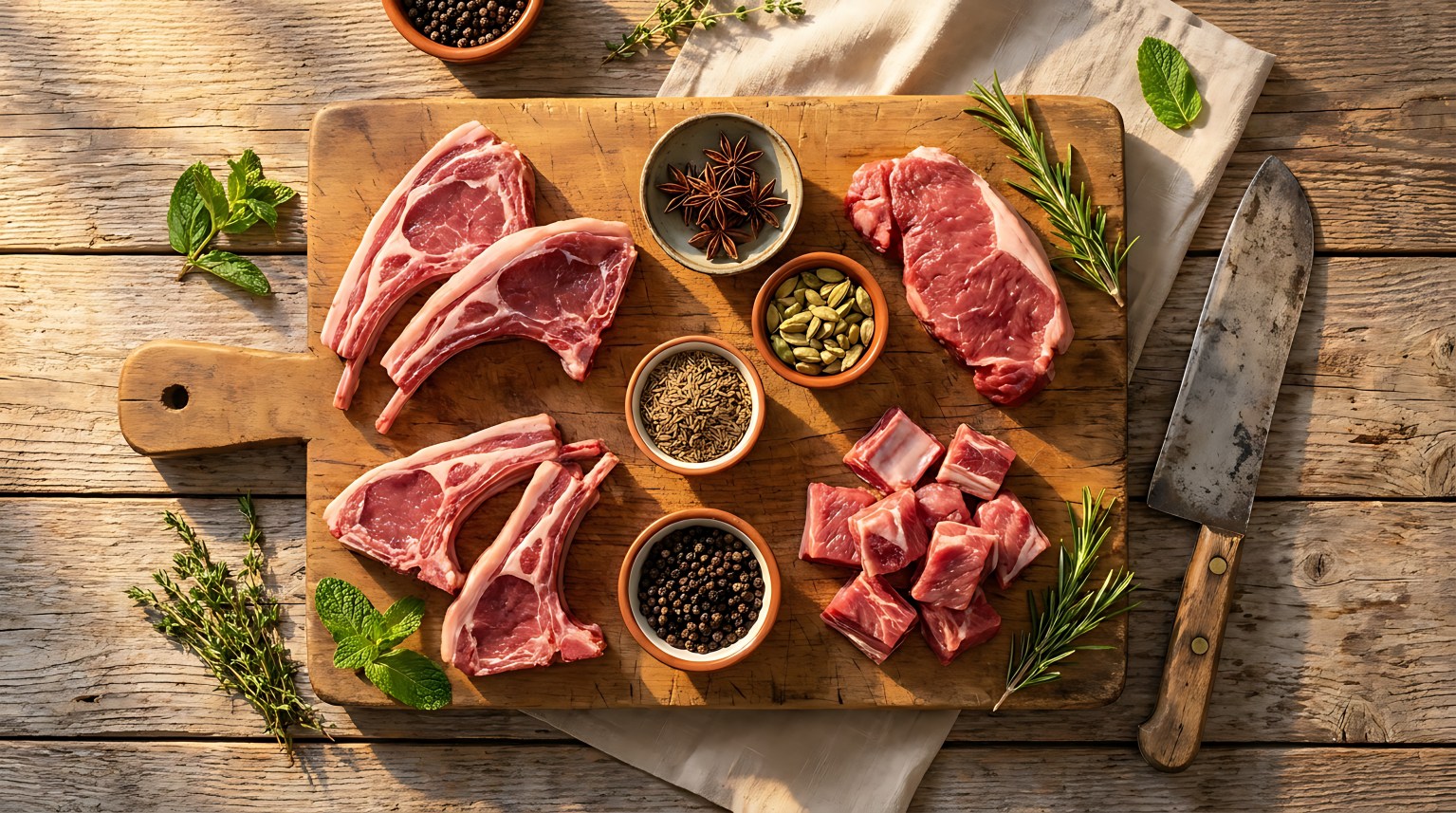
Recipes use caramelize for everything. Caramelize the onions. Caramelize the crust. Caramelized edges on the cauliflower. It is doing the work of two entirely different chemical processes that happen to look similar from across a kitchen, and conflating them is why people cannot reliably get either one.
They have different ingredients, different temperatures and different flavors, and once you can tell them apart you can decide which one you are trying to cause.
Caramelization is sugar, alone, taking itself apart
Heat sugar past its threshold and it decomposes without needing anything else present. No protein, no other ingredient, just thermal breakdown into hundreds of smaller compounds.
The thresholds differ by sugar, which is worth knowing because it explains a lot. Fructose starts around 230°F, which is startlingly low. Sucrose, ordinary table sugar, needs about 320°F. Maltose is highest at roughly 360°F.
What you get out of it is the flavor everyone means by caramel: buttery from diacetyl, slightly burnt-sugar, a touch bitter at the end, and sweet. Also darkening, and a loss of sweetness overall as the sugar destroys itself.
Pure caramelization is rarer in savory cooking than people think. A caramel sauce is caramelization. A tarte tatin is caramelization. Very little else is only caramelization.
Maillard is protein and sugar meeting, and it is what most browning actually is
The Maillard reaction needs two things in the same place: an amino acid, from protein, and a reducing sugar, which means glucose, fructose or lactose but not sucrose directly. They react, then the products react with each other, and so on through a cascade that produces several hundred aromatic compounds.
That cascade is why browned food smells complicated and caramel smells simple. Pyrazines give you roasted and nutty. Furans give you sweet and caramel-like. Sulfur compounds from certain amino acids give you meaty and savory. None of those exist in a pure caramel.
Maillard runs meaningfully from about 285°F and accelerates sharply above it, but it is not a threshold reaction the way caramelization is. It happens slowly at low temperatures too, over months in an aged ham or hours in a low oven, which is why a long braise develops depth without anything ever browning visibly.
A seared steak is essentially all Maillard, because meat has very little sugar. A caramel is all caramelization. A browned onion is genuinely both, because onions carry sugars and amino acids together, which is why nothing else in the kitchen smells quite like onions going dark.
The single rule that governs both, and the one everybody breaks
Neither reaction proceeds usefully until the surface of the food is above 212°F, and the surface cannot get above 212°F while there is liquid water sitting on it.
Water boiling at the surface pins the temperature there. All the energy going into the pan is being spent turning water into steam rather than raising the surface temperature, and it will stay pinned until the water is gone. That is the entire explanation for three separate pieces of kitchen advice that usually get delivered without one.
Pat the surface dry, because the water has to go before anything else can start. Do not crowd the pan, because every additional piece adds water and a crowded pan cannot evaporate it fast enough. And use a pan with enough surface area for what you are cooking, because evaporation capacity is a function of area and doubling the food in the same skillet is a decision to steam it.
This is also why the oven browns so much worse than a pan for the same nominal temperature. Air is a poor conductor of heat and an oven is a closed box that the food is steadily filling with its own water vapor. The same number on the dial and in the oil are not the same thing.
Three levers that push Maillard specifically
Alkalinity speeds it up substantially. A pinch of baking soda in a pan of onions will darken them in a fraction of the usual time, and it is the same principle as the lye dip that makes a pretzel brown the way it does. Use very little, because too much gives a soapy taste and turns things to mush by breaking down pectin.
Adding a reducing sugar gives the reaction something to work with where there was not much. This is why a little honey or a splash of milk on a piece of chicken skin changes the color dramatically, and why a dairy-containing marinade browns so well: lactose plus protein is Maillard’s ideal pair.
And fat is not a flavor here so much as a contact medium. Hot fat touches every part of an irregular surface, where hot air touches perhaps a third of it. The fat is not browning the food, it is delivering the heat to the places air cannot reach.
So which one are you after
If what you want is sweet, buttery and simple, you want caramelization, and you want sugar, high heat and patience with no protein getting in the way.
If what you want is savory, complicated, roasted and deep, you want Maillard, and you want a dry surface, a hot pan, enough room, and maybe a little alkalinity or a little lactose to help it along.
And if you are browning an onion you are doing both at once, slowly, for a lot longer than the recipe says, which is why the instruction to caramelize onions in ten minutes has done more damage to home cooking than almost any other sentence in print.
Part of Kitchen Systems.
Where this goes next

