A Home Oven Has No Steam, and That Is Most of Why Your Bread Has No Crust
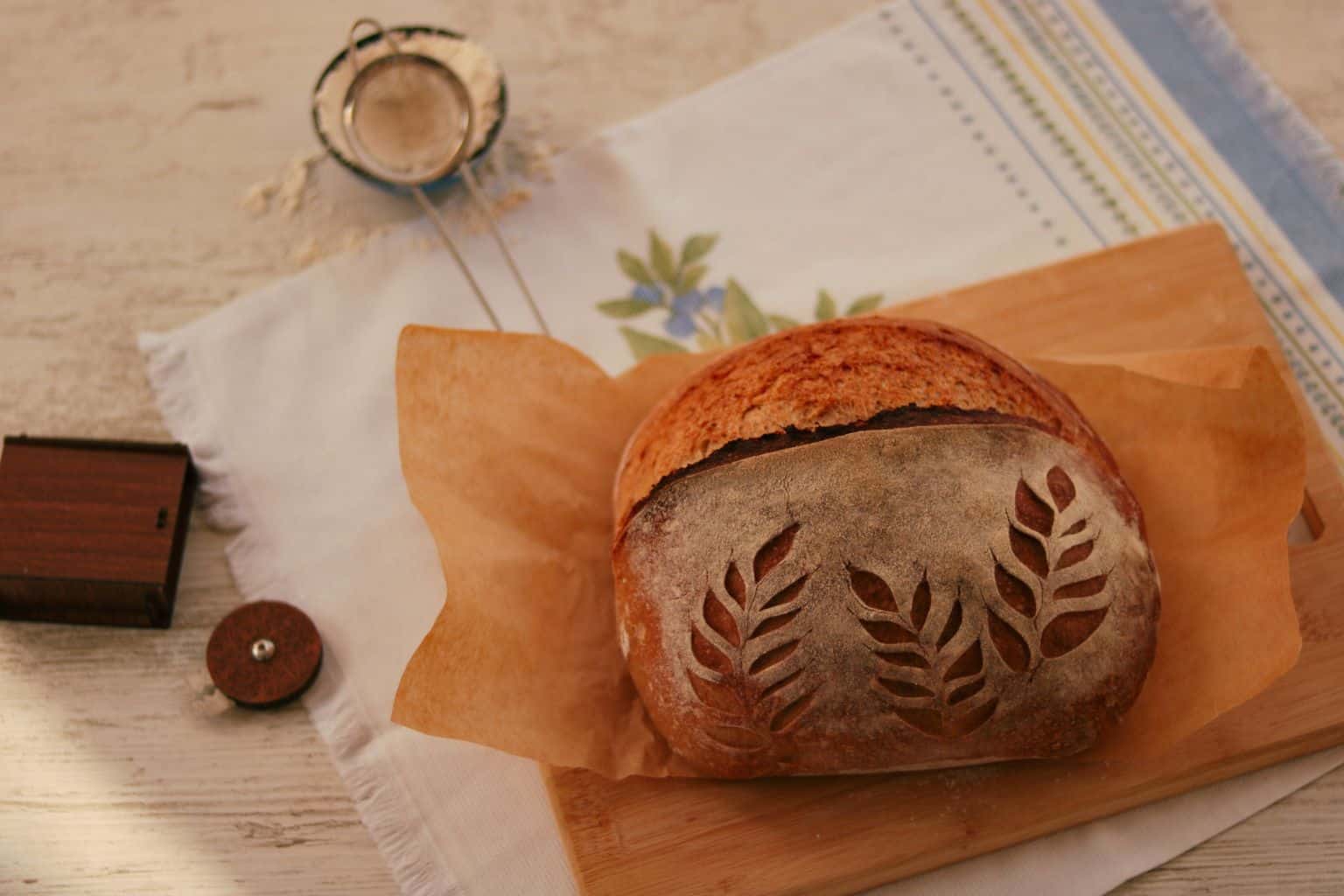
The loaf comes out smaller than it looked in the basket, pale, with a thick matte crust and a ragged split down one side that nobody chose. The dough was fine. The oven was hot. The recipe was followed.
What was missing is water in the air for the first ten minutes, and almost everything people dislike about home-baked bread traces back to that one absence.
Everything the loaf will ever become happens in ten minutes
A loaf goes into a hot oven and does nearly all of its expanding in the first stretch, in a burst called oven spring. Three things drive it: the gases already trapped in the dough expand as they heat, some of the water in the dough flashes into steam, and the yeast has a last frantic surge of activity before it dies somewhere around 140°F.
Then, as the interior climbs further, the starches gelatinize and the proteins set, and the loaf becomes a fixed structure. Whatever size it reached by then is the size it is.
So the only question that matters in those minutes is how long the surface stays flexible enough to allow the expansion, and that is entirely a question of moisture.
A dry surface sets early and stops the rise
In a dry oven the outside of the loaf begins losing water immediately. Once the surface dries it firms, and a firm surface is a lid on the expansion happening underneath it. The loaf stops growing while the inside is still trying.
The inside then has to go somewhere, so it bursts through wherever the crust is weakest — which is the random tear down the side, and it is a symptom rather than a style.
The crust that results is thick, pale and dull, because it spent the whole bake drying rather than browning.
What steam actually does, and it is two separate things
Steam in the oven condenses on the cool surface of the loaf, which keeps that surface wet and pliable for the whole of the expansion window. That is the rise.
The second effect is the crust itself. Water on the surface gelatinizes the starch there into a thin film, and when the steam is removed later that film dries into a smooth, glassy, deeply colored shell. The shine on a good loaf is gelatinized starch, not egg wash and not luck.
A moist surface also stays cooler for longer, which delays browning until the loaf has finished expanding — so the browning reactions run at the end, on a surface that has stopped moving, rather than early on one that has not.
A bakery oven injects steam. A domestic oven vents it.
That is the whole of the difference, and it is not a quality gap. Home ovens are built to let moisture out.
Which is why the Dutch oven method works so completely: it stops trying to steam the oven and steams the loaf instead. The dough’s own moisture evaporates inside a sealed heavy pot, the surface stays wet, and the environment inside that pot is closer to a bakery oven than anything else available domestically.
Preheat the empty pot with the oven, for longer than feels necessary — the number on the dial reports the air temperature, and the mass is still climbing. Bake covered for the first twenty minutes or so, then take the lid off for the rest.
When a Dutch oven will not do
An inverted roasting pan, a deep metal bowl or a second cake tin over the loaf does the same job less elegantly. Anything that traps the loaf’s own moisture for the first stretch will work.
The tray-of-water method — a preheated metal pan on the bottom shelf, boiling water poured in as the bread goes in — produces a real burst of steam, and it is worth doing when nothing can cover the loaf. Use a heavy pan and preheat it, because a cold thin one just makes warm water.
Spraying the oven with a mist bottle is the method most often recommended and the least effective. The water is a few milliliters, most of it lands on the walls, and the door has been open for the whole operation. It is not nothing, and it is far less than a lid.
A cast-iron pot is the expensive answer and an inverted roasting pan is the free one, and the free one is much closer to the expensive one than either is to a mist bottle. The thing you are buying is a lid. Everything else about the pot is preference.
Scoring is a structural decision, not a signature
Since the loaf is going to burst somewhere, scoring decides where. A cut is a deliberate weak point that directs the expansion, which is why a scored loaf opens cleanly and an unscored one tears at the base.
The angle matters. A cut straight down opens into a canyon; a cut at a shallow angle, almost parallel to the surface, lifts a flap that peels back as the loaf grows and dries into the raised lip bakers call an ear.
The ear is the part people chase and the part that matters least. Shallow cut, cold dough, you get one. Deep cut, warm slack dough, you get a canyon and a loaf that went sideways. Either way the scoring has already done its real job, which was to choose where the tear goes instead of leaving it to the weakest patch of crust.
Cut fast, with something genuinely sharp, on a dough that is cold and firm from the refrigerator rather than warm and slack. A blade that drags rather than slices pulls the surface and deflates it.
Heat from below is the other half of the spring
The bottom of the loaf needs a sharp burst of conduction to drive that initial expansion, which is what a preheated stone, steel or heavy pot provides and what a cold baking sheet does not.
Thirty to forty-five minutes of preheat for a stone is not excessive. A loaf landing on a surface that has only been hot for ten minutes gets a fraction of the lift, at the same oven setting.
This is the half hour nobody budgets for. The dough is proofed, the dial says the oven is ready, and going in now produces a loaf that looks exactly like an underproofed one and gets blamed accordingly. The stone was the thing that was not ready.
Then the steam has to go away
Leave the lid on for the whole bake and you get a pale, soft, leathery crust, because nothing ever dried or browned.
Remove it once the loaf has stopped expanding — usually around the twenty-minute mark — and the remaining time is for color, for crust and for driving the interior to temperature. A finished lean loaf is around 205°F to 210°F in the middle, which is a more reliable test than tapping the bottom.
Not every bread wants any of this
Steam and a hard crust are for lean hearth breads: sourdough, baguettes, country loaves, anything that is flour, water, salt and leavening.
Enriched doughs — sandwich bread, brioche, buns, anything with butter, milk, egg or sugar in it — want the opposite. They are baked cooler, in a tin, with no steam, and their crusts are meant to be soft. Steaming a brioche produces a strange leathery skin and no benefit, and the sugar in them browns fast enough on its own.
Cooling is still baking
Starch continues to set as the loaf cools, and cutting into a hot lean loaf releases steam that should have stayed in it and leaves a gummy interior behind.
An hour on a rack, longer for a large loaf. The crust softens slightly as moisture migrates outward and then crisps again if the bread is reheated, which is the same reversible process that governs staling, and staling is not drying out.
None of this rescues a dough that was under-fermented or over-proofed — the schedule and the cues are their own problem, and they happen before the oven. But a well-fermented dough baked dry will still disappoint, and the same dough baked under a lid will not, which is a large return on owning one heavy pot.
Part of Recipes & Technique.


