Brown-Butter Hash-Brown Gratin with Chive Sour Cream
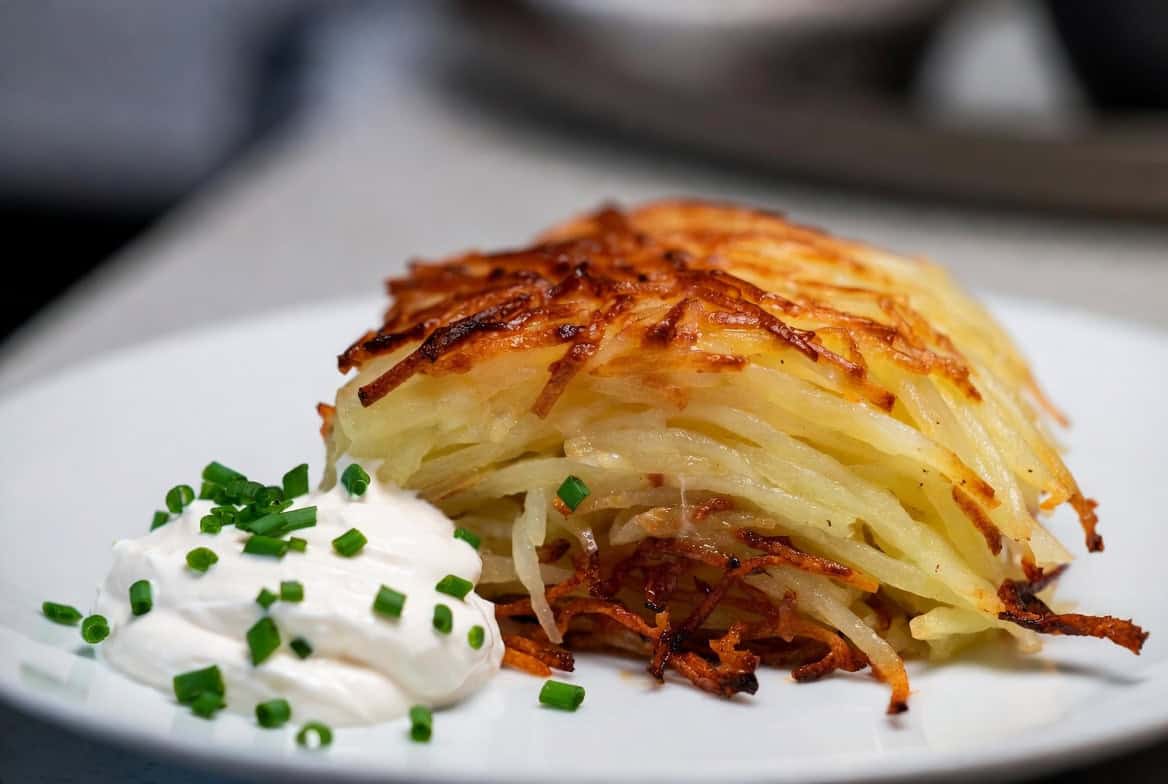
A shredded-potato gratin with brown butter, crisp edges and cold chive sour cream, designed to reheat well without sacrificing the crust.
The parts that change whether this works tonight.
- Yield
- 10 servings
- Time
- Prep 30 minutes · Cook 55 to 70 minutes
- Equipment
- Box grater or food processor, towels, saucepan, mixing bowl, 9-by-13-inch metal pan, foil, spatula, and sharp knife
- Make-ahead
- Assemble up to six hours ahead, press plastic directly on the surface, and refrigerate
- Leftovers
- Refrigerate for up to four days. Reheat uncovered at 400°F for 12 to 18 minutes, until the center reaches 165°F. Store sour cream separately
- The method
- 13 ingredients · 8 steps
From this recipe’s own recipe card. Nothing here is a guess.
Tools
Box grater or food processor, towels, saucepan, mixing bowl, 9-by-13-inch metal pan, foil, spatula, and sharp knife.
Ingredients · swaps in parentheses
Russet potatoes, butter, onion, salt, pepper, garlic powder, cream, Gruyère, Parmesan, sour cream, chives, and lemon.
Magic
Remove as much potato moisture as possible, compress firmly, uncover for a long crisping finish, and rest before cutting so the squares hold.
Gotcha
Wet shredded potatoes make a gummy center. Rinse and squeeze them thoroughly, use a metal pan, and give the gratin enough uncovered time to brown.
This gratin keeps the architecture of hash browns—crisp shredded potato, browned edges, and unapologetic salt—but gives it the sliceable richness of a casserole. Brown butter deepens the dairy, while chive sour cream stays cold and sharp against the hot potatoes.
Yield and timing
- Yield: 10 servings
- Prep: 30 minutes
- Bake: 55 to 70 minutes
- Rest: 15 minutes
Ingredients
- 4 pounds russet potatoes, peeled
- 6 tablespoons unsalted butter
- 1 small onion, grated
- 2 teaspoons kosher salt
- 1 teaspoon black pepper
- 1 teaspoon garlic powder
- 1 cup heavy cream
- 1 cup shredded Gruyère or sharp cheddar
- 1/2 cup grated Parmesan
For chive sour cream
- 1 1/2 cups sour cream
- 1/3 cup chopped chives
- 1 tablespoon lemon juice
- 1/2 teaspoon kosher salt
Method
Where the time goes
- Brown butter
- Shred and dry
- Season
- Pack the pan400°F
- 25–40 minBake
- 1–3 minBroil if needed
- Make sour cream
- 15 minRest and cut
- Brown butter: Melt butter in a light saucepan and cook until the milk solids turn amber. Pour into a bowl immediately.
- Shred and dry: Coarsely grate potatoes. Rinse briefly in cold water, then squeeze very dry in a clean towel. Moisture left here becomes steam instead of crust.
- Season: Toss potatoes with grated onion, salt, pepper, garlic powder, cream, half the browned butter, Gruyère, and half the Parmesan.
- Pack the pan: Heat oven to 400°F. Brush a 9-by-13-inch metal pan with browned butter. Press potato mixture firmly and evenly into the pan. Brush top with remaining butter and sprinkle with remaining Parmesan.
- Bake: Cover loosely with foil and bake 30 minutes. Uncover and bake 25 to 40 minutes more, until deeply browned, crisp at the edges, and tender in the center.
- Broil if needed: Broil 1 to 3 minutes for additional color, watching continuously.
- Make sour cream: Stir sour cream, chives, lemon, and salt.
- Rest and cut: Rest gratin 15 minutes before cutting into squares. Serve chive sour cream alongside or in small spoonfuls on top.
Make-ahead and service
Assemble up to six hours ahead, press plastic directly on the surface, and refrigerate. Add 10 minutes to the covered bake. Bake one day ahead and reheat uncovered at 375°F. Hold on a rack in a 225°F oven for 30 minutes.
Substitutions
- Use Yukon Gold potatoes for a creamier, less crisp gratin.
- Replace Gruyère with cheddar or fontina.
- Add cooked bacon or caramelized onion, keeping added ingredients dry.
- Use crème fraîche instead of sour cream.
Likely failure points
The center is gummy: Potatoes were not rinsed or squeezed dry.
The top is pale: The pan was glass, the oven was cool, or the gratin stayed covered too long.
The squares collapse: It was cut before resting.
The bottom sticks: The pan was under-buttered or the browned butter solids settled unevenly.
Storage
Refrigerate for up to four days. Reheat uncovered at 400°F for 12 to 18 minutes, until the center reaches 165°F. Store sour cream separately.
Why this instead of a regular potato gratin
A classic gratin is creamy, layered, and soft by design. This one is for the menu that needs potatoes with actual edge. Shredding creates more exposed surface, which means more browning, more crisp perimeter, and a center that can still slice cleanly.
If the main course already has a soft sauce and a tender texture, that difference matters. The side should not be another beige cushion simply because potatoes are involved.
Moisture control is the whole recipe
Four pounds of potatoes hold an astonishing amount of water. Rinsing removes loose surface starch; squeezing removes the water that would otherwise steam the gratin from the inside. Do both, and do them seriously.
The towel should feel damp when you are finished. If it looks almost as dry as when you started, the potatoes are still carrying too much water. That is the difference between crisp strands and a casserole that cuts like oatmeal.
Brown butter is not there for a title
This recipe already has cream, cheese, onion, and potato. Brown butter only earns the extra saucepan because its toasted milk solids push against all that dairy sweetness and make the edges taste deeper rather than simply richer.
Use a light pan so you can see the milk solids. Pour the butter out when they are amber. The residual heat is still working, and black specks do not become sophisticated because potatoes are nearby.
Pressing creates the slice
Do not toss the mixture into the pan and hope gravity organizes it. Press it firmly and evenly, especially into the corners. That contact helps the shreds knit into a sliceable block while the top stays exposed enough to crisp.
The fifteen-minute rest is part of the structure too. Cut straight from the oven and you will get delicious potato debris. Wait, and you get actual squares.
For a party, bake before the room gets busy
This is a very good make-ahead side because reheating improves the surface. Bake it earlier in the day or the day before, cool, then reheat uncovered at 375°F until the center is hot and the edges have recovered.
Serve the sour cream separately. Cold dairy spread across the top of the whole pan looks generous for about four minutes and then softens every crisp strand you worked to create.
Scale with two pans
For twenty people, use two 9-by-13-inch pans rather than one deeper vessel. A deeper gratin takes longer to heat through and gives you less crisp surface per serving, which defeats the entire reason for choosing this version.
Two pans also let you replenish the buffet rather than exposing every piece at once. One stays hot while the other is being eaten.
What belongs beside it
This is rich. Give it something roasted or grilled and something green, bitter, or acidic. Roast chicken and a sharp salad work. Braised beef and cabbage work. A creamy main plus another creamy vegetable does not need this much dairy support.
The gratin should be the comforting thing on the plate, not one of four comforting things trying to out-comfort each other. Its reheat behavior is a good example of the Make-Ahead Holding Test; the rest of the recipes written around what reheating does to them are in Recipes and Technique.
Part of Recipes & Technique.
Recipe provenance: Salty & Clever editorial formulation, built from established culinary technique and the traditions identified in the article. No chef, restaurant, family, or firsthand cultural provenance is claimed unless it is explicitly named and sourced. How we write and check recipes
Where this goes next
The next thing you will need.
Make it with
 Recipe
