Catering job costs: what the quote must cover
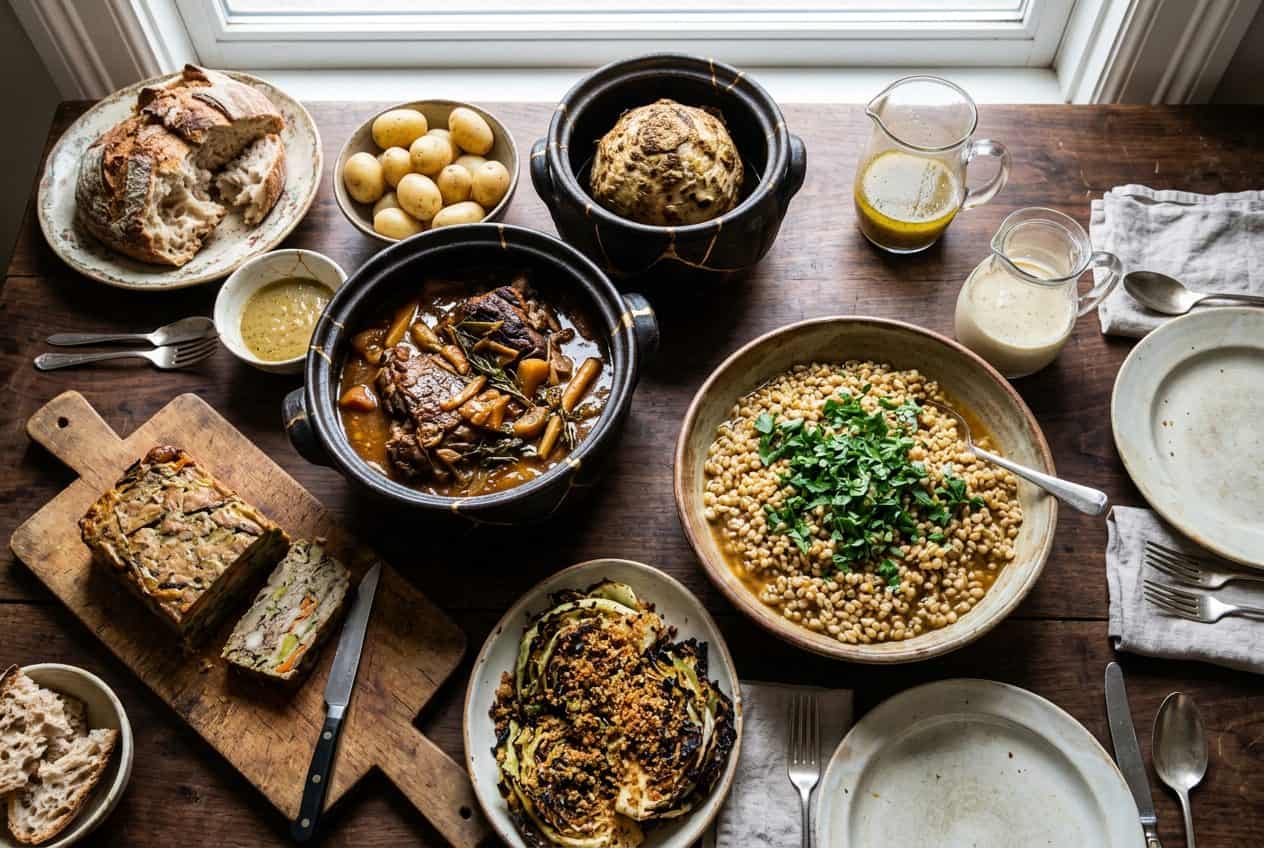
A catering quote can cover the shopping and still fail to pay for the job. Someone planned the menu, bought the ingredients, packed the vehicle, found the loading door, set up service and stayed to clear it. If those hours and costs are absent, the number at the bottom describes only part of the work.
Build the quote around a defined service. Then check quantities, the production schedule and the kitchen constraints against that scope. The price is only useful if the team can deliver what it includes.
Write the service boundary before costing it
Record the guest count, menu revision, service style, location, access window, equipment, staffing, arrival time, first service and handback deadline. Name what the client supplies and what you supply. A drop-off tray, a staffed buffet and a plated dinner for the same number of people are different jobs.
Give the quote a revision and an expiry or review point appropriate to the job. Keep a clear record of the assumptions the client has accepted. When the count, timing or venue changes, revise the affected quantities, resources and price together. A text saying “four more people” should not silently become an obligation to supply another table, extra service time and a second delivery.
Separate portions from purchasing
The quantity record needs to say what its number represents: people expected to take a component, finished portions, usable recipe yield or purchased stock. Keep units visible. A kilogram of purchased ingredient and a kilogram of finished food are not interchangeable when the preparation changes yield.
Use the recipe or quantity tool as the calculation source. Record the yield assumption and where it came from, then compare it with the actual ingredient and method. Add any reserve once, with a reason. Combine repeated ingredients across dishes before rounding to purchase packs; rounding each recipe independently can create avoidable excess.
For a deliberately invented example, twelve portions at 180 g require 2.16 kg finished. An assumed 80% usable yield implies 2.70 kg purchased before any separately recorded reserve or pack adjustment. Neither the portion nor the yield is a standard for your menu. The purpose of the example is to show which assumption changes the buying quantity.
Start with the quantity guide and the relevant free calculator. For a recurring plan, keep the chosen inputs and outputs in your existing menu or product record.
Cost the schedule you can actually perform
An efficient-looking menu can be expensive to execute. Check how many batches fit in the equipment, which tasks need the same person, and when food or used equipment needs a landing surface. Include loading, travel, setup, clearing and the agreed kitchen handback.
A fictional oven plan with two sequential 35-minute batches requires 70 minutes before changeover or other allowances. A 40-minute window cannot accommodate it. The useful response is a revised method, menu, resource or service agreement. Pricing an impossible schedule more accurately will not make it work.
Use the Start Line for backward timing, Oven Traffic for oven demand and the Service Window for service pressure. Record the unresolved collision and who will decide, rather than hiding it inside a generous-looking buffer.
Name what the contribution includes
List ingredients and consumables, paid labor and its job-related costs, travel, rentals and other direct job expenses. Decide how owner labor is treated. An internal allowance for your time is useful only when it is clearly identified and not deducted a second time elsewhere.
Revenue less the stated job costs gives the contribution under that cost boundary. It still has to support costs outside that boundary. Label allocated overhead separately and explain the allocation. Do not call a remainder after groceries “net profit” when other business costs have not been assessed.
Keep margin and markup distinct. Margin divides the remainder by revenue; markup divides it by cost. At $800 of stated costs and $1,200 revenue, the $400 difference is a 33.3% margin on revenue and a 50% markup on those costs. These are two descriptions of the same example, not interchangeable targets or recommended rates.
Compare the quote with the completed job
In this fictional job, the $800 estimate contains $300 ingredients, $240 paid labor, $60 travel and rental, and a $200 owner-labor allowance. Against $1,200 revenue, the contribution after that allowance is $400 before remaining overhead and tax.
Actual ingredients rise to $330 and paid labor to $270. Travel and rental remain $60, and the stated owner allowance remains $200. Costs become $860; contribution becomes $340, or 28.3% of revenue. The $60 change has two identifiable causes. Record whether they came from a changed count, rework, purchasing prices or an incomplete original scope.
Close the record with actual hours as well as receipts. Choose one corrective action for the next comparable job: adjust a yield assumption, account for load-in, simplify a labor-heavy component, or clarify what a late change costs. Keep the original estimate so the explanation survives.
Use the existing costing products
The Catering Cost Desk and its Quote Register support pricing and the record of quotes and actual outcomes. The Catering Operations System connects the larger operational record. Choose the level that matches the work you need to keep.
The Service planning and review companion provides editable records for the assumptions around those calculations: quantity evidence, schedule conflicts, kitchen limits, cost boundaries and approved changes. Product listings specify the files currently included. The companion records decisions; calculations remain in the existing products.
Method and scope
The SBA’s break-even guidance explains the relationship between fixed costs, variable costs and contribution. The USDA Food Buying Guide provides food-form and yield information for child nutrition programs; those programs’ meal patterns are not private-event portion standards. Sources reviewed September 27, 2026. All numerical cases here are fictional teaching examples.
This is a job-planning method. Tax treatment, contracts and food-handling requirements belong in the procedures and qualified advice applicable to your business. Return to the Operations Desk or continue with the private-chef visit plan.
Part of Hosting & Service.
Where this goes next

