Nonstick, Stainless, Cast Iron and Carbon Steel Are Four Tools, Not Four Price Points
Pans get ranked as though there were a best one. They have genuinely different physical properties, each of which makes them right for some jobs and actively wrong for others.
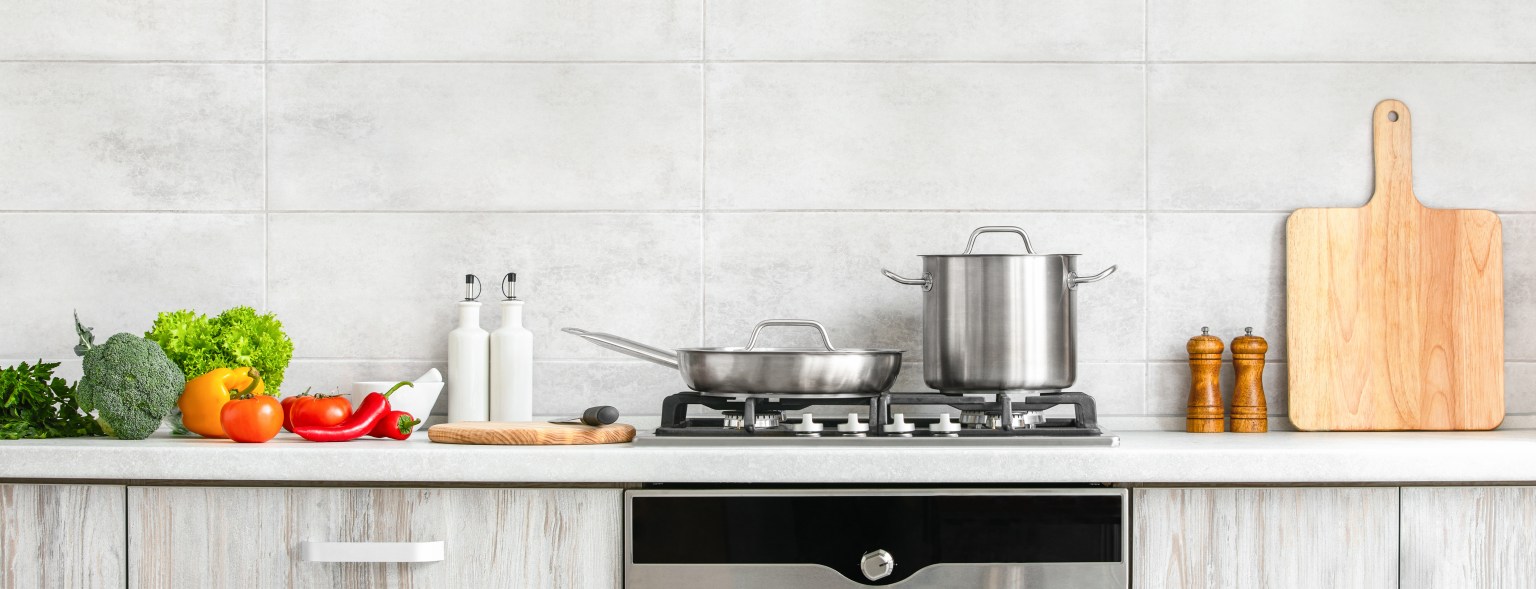
Cookware gets discussed as a ladder: nonstick for beginners, stainless when you get serious, cast iron if you are committed, carbon steel if you have opinions. It is a ranking, and it is the wrong shape for the subject.
What separates these materials is not quality. It is two physical properties that pull in opposite directions, plus a surface chemistry question, and the combination makes each of them genuinely correct for some jobs and genuinely wrong for others.
Two properties, and they are not the same thing
Conductivity is how fast heat moves through the metal. High conductivity means the pan heats evenly and responds quickly when you turn the burner down. Copper is the champion; aluminum is close and far cheaper, which is why almost every good pan has aluminum in the middle of it.
Heat capacity is how much energy the pan holds once it is hot. High capacity means the pan does not lose its temperature when cold food lands on it. This is mass, mostly — a heavy pan holds more heat than a light one of the same metal.
These are different, and the confusion between them is behind most bad pan advice. Cast iron is a mediocre conductor and an excellent battery. Thin stainless is a poor conductor and a poor battery. A heavy aluminum-core stainless pan is good at both, which is why it costs money.
Which one you want depends on whether the job needs responsiveness or stamina. A delicate sauce needs the pan to obey the burner. A steak needs the pan not to care that a cold steak just landed on it.
Nonstick: release, and nothing else
The coating exists to stop food from bonding to the surface. That is its entire job and it does it better than anything else.
Which makes it right for eggs, delicate fish, pancakes, crepes, and anything where the food coming out intact matters more than anything that happens to it while it is in there.
And it makes it wrong for anything you intended to build a sauce from, because a surface nothing sticks to produces no fond, and fond is the most concentrated thing in the process. A chicken thigh cooked in nonstick and one cooked in steel give you the same chicken and two different dinners.
The coating also has a ceiling. Above roughly 500°F it begins to degrade, which means nonstick is not the pan for a hard sear or for anything going into a very hot oven. Medium heat, metal utensils kept away, and an honest acceptance that it is a consumable: even a well-treated nonstick pan is a five-year object, not a lifetime one.
Stainless: the one that is bad at everything except the thing you need most
Stainless steel by itself is a poor conductor. What makes a good stainless pan good is the aluminum or copper core sandwiched inside it, and the difference between a clad pan and a cheap one is entirely that layer.
Food sticks to it, which is the feature. Protein bonds to the hot metal, browns, and releases when the crust is formed — sticking is a stage, not a crisis — and what stays behind is the fond.
It is also non-reactive, so it does not care about tomato, wine, lemon or vinegar, and it can be scrubbed, put in the dishwasher, heated empty, or deglazed hard without consequence.
That combination — builds fond, tolerates acid, indestructible, responsive if it is well made — is why it is the default pan in professional kitchens. It is the one to buy if you are buying one pan and you do not know what it will be asked to do.
Cast iron: the battery
Heavy, slow to heat, uneven while heating, and once it is fully hot it stays hot through anything you put on it.
That stamina is the whole argument. A steak or a batch of smashed potatoes hitting a properly preheated cast iron pan does not cool the surface the way it would cool a lighter one, so the browning starts immediately and continues. It is also oven-safe at any temperature, which makes the sear-then-finish move a single-pan operation.
The unevenness is real and worth planning around. Cast iron heats where the burner touches it and takes several minutes to spread that heat outward, so a two-minute preheat gives you a hot spot in a cool pan. Give it five, or start it in the oven.
Seasoning is polymerized oil, not a coating in the manufactured sense: thin layers of fat heated past the point where they harden into a bonded surface. It builds with use, it is mildly nonstick, and it is more robust than the folklore suggests — soap is fine, a short acidic deglaze is fine, a twenty-minute tomato braise will strip some of it. Dry it on the heat and wipe it with a trace of oil, and it repairs itself faster than it wears.
Carbon steel: cast iron that listens
The same iron, rolled thin. It seasons the same way and develops the same surface, but with far less mass, which means it heats in two minutes rather than eight and responds when you change the flame.
The trade is stamina. A thin carbon steel pan loses temperature when a cold steak lands on it in a way cast iron does not, so it is better for things that need the surface to keep moving — a stir fry, fish, vegetables, an omelet in the French style — and slightly worse for a single thick piece of meat.
It is what most restaurant sauté pans are, and it is the closest thing to a pan that does the fond job, the release job and the high-heat job at once. What it will not tolerate is long contact with acid, which strips the seasoning back to bare metal.
Two things that are not pans and matter anyway
Enameled cast iron — the Dutch oven — is cast iron with a glass surface, which means it has the mass without the reactivity. That is why it is the braising vessel: it takes an acidic tomato braise for four hours, it holds a steady low temperature, and it goes from stove to oven. It browns less well than bare iron, because enamel is a worse surface for fond.
Sheet pans are aluminum and thin on purpose. Light, fast, and they warp when heated unevenly, which is a design consequence rather than a defect. A heavier-gauge one warps less and browns more evenly.
The short version, by job
Eggs, fish, pancakes: nonstick.
Anything that will become a pan sauce: stainless or carbon steel.
Steak, cornbread, anything that wants a hard crust and goes into the oven: cast iron.
Stir fry, fast vegetables, a pan you want to be able to move quickly: carbon steel.
Tomato, wine, lemon, anything long and acidic: stainless or enameled, never bare iron.
Cooking for one or two: whichever of these you buy, buy it in the small size, because the material matters less than whether the food covers the floor of the pan.
Three pans is a complete kitchen
A small nonstick for eggs. A ten- or twelve-inch stainless or carbon steel for everything with a sauce attached. A cast iron skillet for the things that want a crust.
Add a three-quart saucepan and an enameled Dutch oven and there is essentially nothing in home cooking that cannot be done, which is a shorter list than most kitchen stores would like, and the money is better spent on the thickness of the pans than on the number of them.
Part of Recipes & Technique.


