Seasoning a Cast Iron Pan Is Polymerized Oil, Not a Ritual
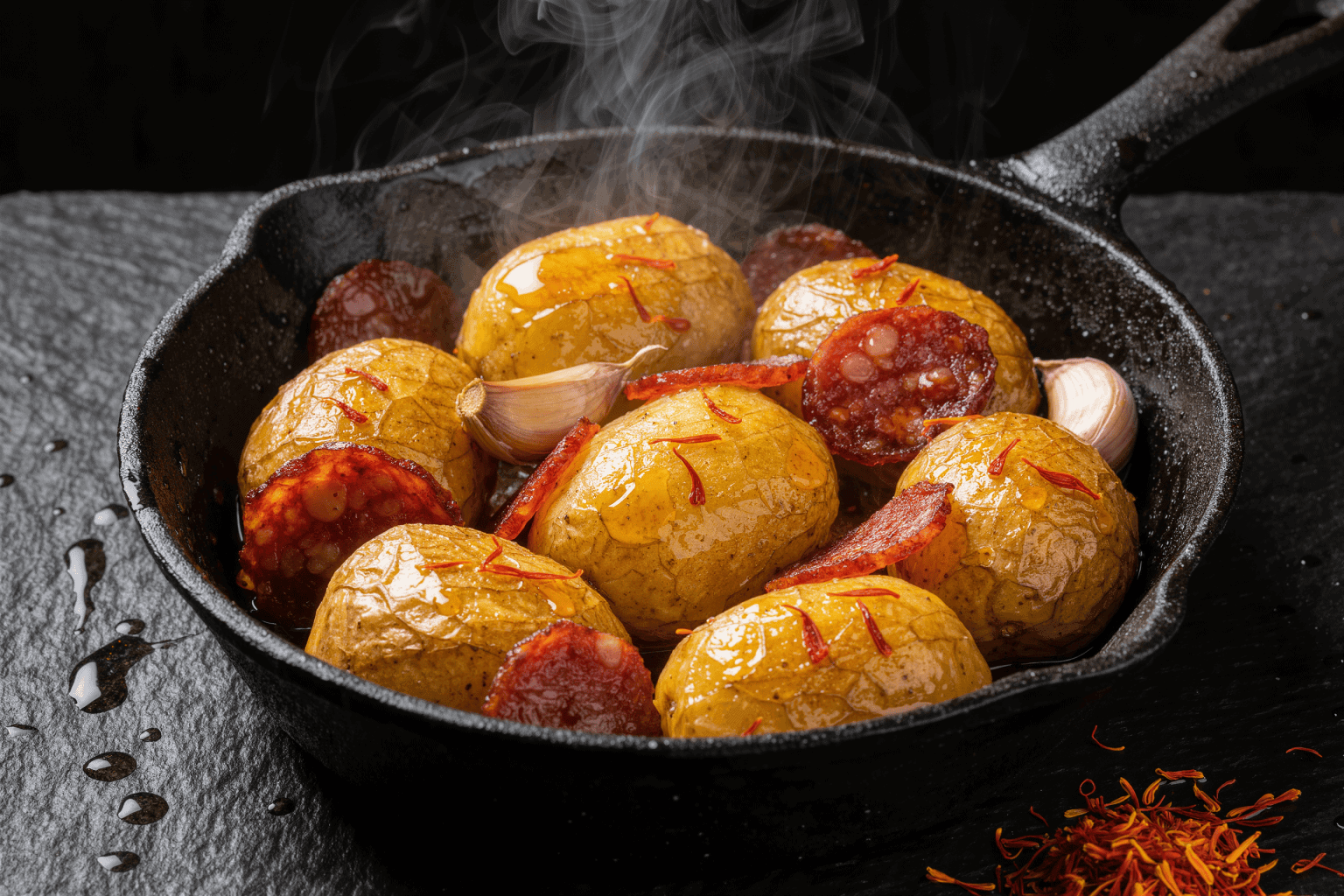
Never use soap. Never use water. Never cook acid in it. Never let anyone else wash it. The rules arrive with the pan and they arrive without a reason, which is why half of them are wrong and the other half are right for reasons nobody states.
What is being protected is a specific physical thing, and once you know what it is the rules sort themselves out in about a paragraph.
The seasoning is a polymer, not a coat of oil
Heat a very thin film of oil past its smoke point and the fatty acids break down, react with oxygen and bond to each other, forming a hard cross-linked layer that grips the iron itself. It is closer to a varnish than to grease.
That is why a well-seasoned pan is dry to the touch and faintly glossy rather than oily. It is also why the surface is not truly nonstick in the way a coated pan is — it is smooth, it is hydrophobic, and it releases food well once hot, which is a different property and a better one for browning.
The polymer builds up in layers, which is why an old pan outperforms a new one and why the seasoning improves every time something is fried in it.
Which settles the soap question
Soap does not dissolve a polymer. Historic soap was made with lye and would attack it; modern dish detergent is a surfactant that lifts grease, and grease is not what the seasoning is made of.
So washing a cast iron pan with soap and a brush is fine and always was. What actually removes seasoning is abrasion — steel wool, a scouring pad, a metal scraper used hard — and that is worth avoiding.
The dishwasher is genuinely bad, but not because of the detergent alone. It is thirty minutes of hot standing water on bare iron, which is the rust problem rather than the seasoning problem.
Rust is the real enemy and water is only half the cause
Iron plus water plus oxygen makes iron oxide. The seasoning is what keeps water off the metal, and anywhere it is thin, water finds bare iron.
So the rule is not never use water. It is never leave it wet. Wash it, dry it with a towel, then put it on a burner for a minute until it is bone dry and the last film of moisture has gone. A thin wipe of oil while it is still warm finishes the job.
And rust is not fatal. Scrub it back with an abrasive and water, dry it, and re-season. A pan that looks ruined is usually twenty minutes away from working.
How to season, and the mistake everybody makes
Thin. Thinner than feels like enough. The correct amount of oil is: wipe it on, then wipe all of it off again as though you had changed your mind. What remains in the pores is the layer that will polymerize.
Then heat it past the oil’s smoke point — an oven at 450°F to 500°F for an hour, upside down, with something underneath to catch drips — and let it cool in the oven.
Too much oil is the universal failure. A thick coat does not polymerize all the way through; it leaves a sticky, tacky film that never hardens, and later flakes off in patches.
Two or three thin rounds beat one thick one, and cooking in the pan does more than any of them.
Which oil, honestly
Almost any will work. More unsaturated oils polymerize faster, which is why flaxseed gets recommended, but flaxseed seasoning is notoriously brittle and tends to flake off in sheets after a few months.
A neutral high-smoke-point oil, or shortening, or the fat you were going to cook with anyway, is the practical answer. The smoke point matters here rather more than it usually does, because exceeding it is the entire point of the operation.
Acid is the one traditional warning that is partly real
A tomato sauce simmered for an hour in a thinly seasoned pan will eat into the layer and pick up a metallic taste. A splash of wine to deglaze a well-seasoned pan for two minutes will not.
So the rule is about duration and about the state of the pan, not about acid as a category. A new or patchy pan should not hold a long acidic braise; a black, well-built one is far more robust than its reputation.
What the pan is actually good at
Cast iron holds an enormous amount of heat and conducts it badly. Both halves matter.
Holding heat means it barely drops when cold food lands, which is why it sears better than anything else and why it recovers slowly between batches despite that.
Conducting badly means it has hot spots over a burner and needs a long, unhurried preheat to even out — five to ten minutes on medium, not two on high. The mass is what you are charging, and the pan is not ready when the handle is warm.
It is therefore excellent for searing, cornbread, frying, and anything moved from stove to oven, and unnecessary for boiling, for delicate fish, and for anything that wants a fast response from the burner. The four pan materials are four different behaviors and this is one of them rather than the best one.
Carbon steel is the same chemistry on lighter metal
It seasons identically, rusts identically, and is maintained identically. It is thinner, so it heats and responds faster and holds less, which makes it better for anything that needs the heat turned down quickly and worse for a long sear on a big piece of meat.
Enameled cast iron is a different object entirely: no seasoning, no rust, dishwasher-tolerant, and it will not take the same bare-metal sear. It also chips and can crack from thermal shock, so it should not go from a hot oven into cold water.
The maintenance, in full
Wash it while it is still warm, with hot water, a brush, and soap if it needs it. Scrape stuck food with a plastic scraper or coarse salt rather than steel wool.
Dry it on the burner. Wipe a few drops of oil around it while warm, then wipe that off too.
Cook fatty things in it often. That is the whole routine, it takes under two minutes, and it is the only part of the folklore that was ever load-bearing.
Part of Recipes & Technique.


