The One Drink and the No-Drink
Home Espresso: The Coffee Is Only Half the Purchase
A home espresso machine can make excellent coffee, but the real purchase also includes a grinder, milk workflow, cleaning, warm-up time, counter space, and a willingness to learn what the machine is telling you.
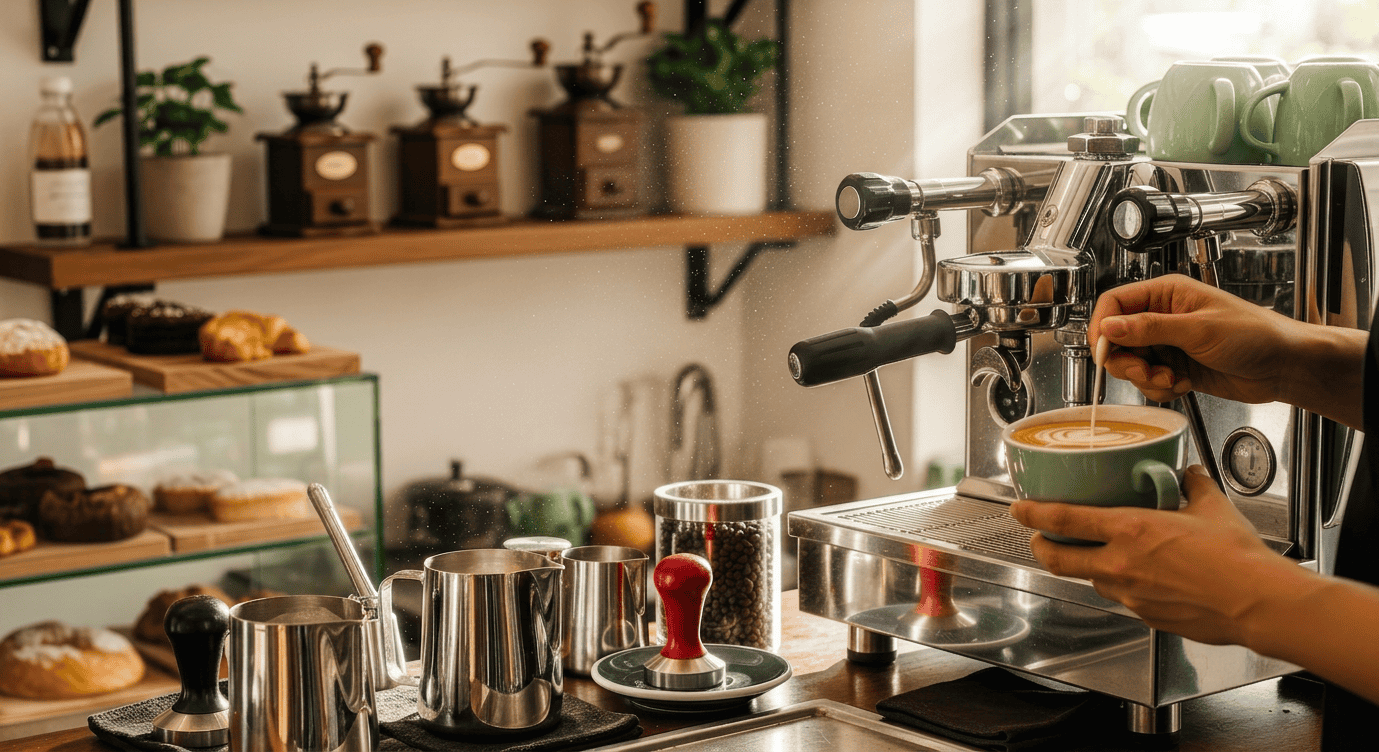
The fantasy of a home espresso machine is one perfect cappuccino in a quiet kitchen. The actual system includes coffee beans, a grinder, water, milk, a scale if you care about consistency, a knock box if you care about your trash can, and several damp cloths that seem to reproduce overnight.
Buying a machine because cafe coffee is expensive only works if you also enjoy making espresso enough to use it. For hosting, the question is narrower. Does this setup improve the drink course without pulling the host out of the room?
What changes for guests
A good espresso setup can turn coffee into a deliberate course after dinner, a better breakfast service, or a late-table drink that does not require a drive. The drink is better, available on your schedule, and part of the table rather than an errand.
The downside is workflow. Warm-up, grinding, dosing, tamping, steaming, wiping, and cleaning can become a second service shift if the machine demands more attention than the occasion can spare. A machine that produces excellent coffee and isolates the host is not a hosting upgrade. It is a private hobby parked in the kitchen.
Buy for the nights and mornings you actually host, not for the fantasy of becoming a cafe.
The grinder is not optional background equipment
Espresso forces hot water through a compact bed of finely ground coffee under pressure. Small changes in grind size alter how quickly water moves through that bed. That means the grinder is not merely responsible for making beans smaller. It controls one of the main variables in the shot.
A good machine paired with an inconsistent grinder can be frustrating. An integrated grinder can simplify the counter, but it also ties two appliances together. Separate grinders take more room but allow each component to be upgraded or replaced independently.
If the budget covers only the machine and treats the grinder as an afterthought, the budget is not finished. In practice, the grinder often decides whether the machine becomes a daily habit or an expensive paperweight.
Decide whether you want espresso or espresso drinks
A person who drinks straight espresso has a different appliance problem from someone making two oat-milk cappuccinos every morning. Milk changes the workflow.
Manual steam wands offer control but require practice. Automatic frothing systems are easier and can produce consistent drinks, but add cleaning and may offer less control over texture. Some newer machines guide dosing, tamping, and milk preparation in ways that reduce the learning curve.
None of those approaches is inherently superior. The right choice depends on whether making the drink is part of the pleasure or merely the obstacle between waking up and drinking it. For hosting, milk drinks also change the cleanup after guests leave. Factor that in before the machine becomes the star of dessert service.
Warm-up time changes the morning and the end of dinner
Some machines are ready quickly. Others benefit from a longer warm-up so the group head, portafilter, and internal components reach a stable temperature. If you leave the house eight minutes after deciding coffee sounds good, a machine that wants ritual may become decorative metal.
The same problem appears after dinner. Guests are ready for coffee while the host is still clearing plates. Look beyond the advertised heat-up number. Think about the full first-drink sequence: turn on machine, prepare beans, grind, dose, distribute, tamp, pull shot, steam milk, purge wand, wipe counter. The machine may be technically ready before you are.
If coffee is meant to close a meal, choose a workflow that can start while the last course is still on the table.
Manual, assisted, and superautomatic are different hobbies
A semi-automatic machine gives the user meaningful control over grinding, dosing, tamping, shot timing, and steaming. That can be satisfying and can produce excellent coffee. It can also create bad coffee in a surprisingly sophisticated manner while you learn.
Assisted machines automate some steps while keeping a portafilter and recognizable barista workflow. Superautomatic machines grind, dose, brew, and often handle milk at the press of a button.
The trade-off is usually control versus convenience. If you want to learn espresso, do not pay extra to remove every decision. If you want a cappuccino before an early meeting, or coffee for four after dinner without a performance, do not buy a machine that assumes you wanted a morning laboratory.
Hosting favors reliability under mild social pressure. A machine that only works when nobody is watching is a private tool.
Water quality matters twice
Water affects flavor and machine health. Extremely hard water can contribute to scale buildup. Water that tastes unpleasant on its own will not become charming under pressure.
Follow the manufacturer’s filtration and descaling guidance. Do not assume that more frequent descaling is harmless; machine materials and water chemistry matter. If the local water is hard, factor filtration or appropriate bottled water into the operating routine before problems appear.
This is dull advice and still one of the main reasons home espresso setups fail early.
Cleaning is the price of milk and pressure
Espresso machines handle coffee oils, fine grounds, hot water, and sometimes milk. Those substances leave residue. The portafilter, baskets, drip tray, steam wand, grinder chute, and milk system all need attention.
Daily cleaning should be simple enough that you will actually do it. A machine with a complicated milk circuit can be convenient while brewing and demanding afterward. A manual wand may be simpler mechanically but requires immediate wiping and purging.
The maintenance cost is part of the product, even when it appears nowhere near the price tag. If the cleanup after guests is longer than the pleasure of the drink, the machine is the wrong scale for your hospitality.
Counter depth is more important than counter width
Espresso machines can be tall, but depth is often what surprises people. Add the portafilter handle projecting outward, room to remove the water reservoir, clearance to fill a bean hopper, and the space needed to steam milk beside the machine.
Measure the complete working zone, not just the machine body. Also check cabinet height if the water tank loads from the top. A beautiful machine wedged under a cabinet it cannot open is an expensive still life.
For hosting, leave room to make two drinks without rearranging the kitchen.
The cost-per-cup calculation needs honesty
Home espresso can save money compared with frequent cafe drinks, but only if the machine is used consistently. Include the grinder, beans, milk, filters, cleaning supplies, possible repairs, and accessories in the calculation.
Also include the fact that the first few weeks may involve wasted coffee while learning. That is not failure. It is part of the operating cost of a manual skill. The economics improve quickly when the appliance replaces an existing cafe habit rather than inventing a new one for the shelf.
Buy the system or choose another coffee method
A home espresso machine makes sense for someone who drinks espresso-based coffee frequently, enjoys some degree of process, has room for the workflow, and is willing to clean the machine consistently. It is especially compelling when two or more people in a household regularly buy cafe drinks.
It is also worth considering if coffee is a real course in how you host breakfast, dessert, or a late table, and if the machine can deliver that course without removing the host from conversation for twenty minutes.
Choose another coffee system if you mostly drink large mugs of drip coffee, want coffee immediately with almost no cleanup, or dislike adjusting variables. A strong drip brewer, pod system, moka pot, AeroPress, or automatic machine may fit better. Espresso is not the highest form of coffee. It is one preparation method with unusually expensive equipment and very small serving vessels.
Choose by workflow before features. Decide how much control you want, how often you make milk drinks, how much room the station gets, and how much cleaning you will tolerate after the guests leave. Then budget for the grinder as part of the machine.
A good espresso setup can become one of the most satisfying appliances in the kitchen and a legitimate part of table service. A mismatched setup can turn the first thirty minutes of every morning, or the end of every dinner party, into technical support.
Research note: a researched category guide based on current search demand, independent testing, and manufacturer documentation. It is not a claim that Salty and Clever personally tested every espresso machine discussed. How we write and check recipes
Research sources: 2026 espresso-machine testing from Consumer Reports and Serious Eats; current appliance-trend data from Rising Trends and SearchSpy; manufacturer care and water guidance used for maintenance considerations.
Part of Drinks & Zero-Proof.
Where this goes next

You must be logged in to post a comment.