The One Drink and the No-Drink
Shaking and Stirring Are Not a Style Choice. They Are Two Different Textures.
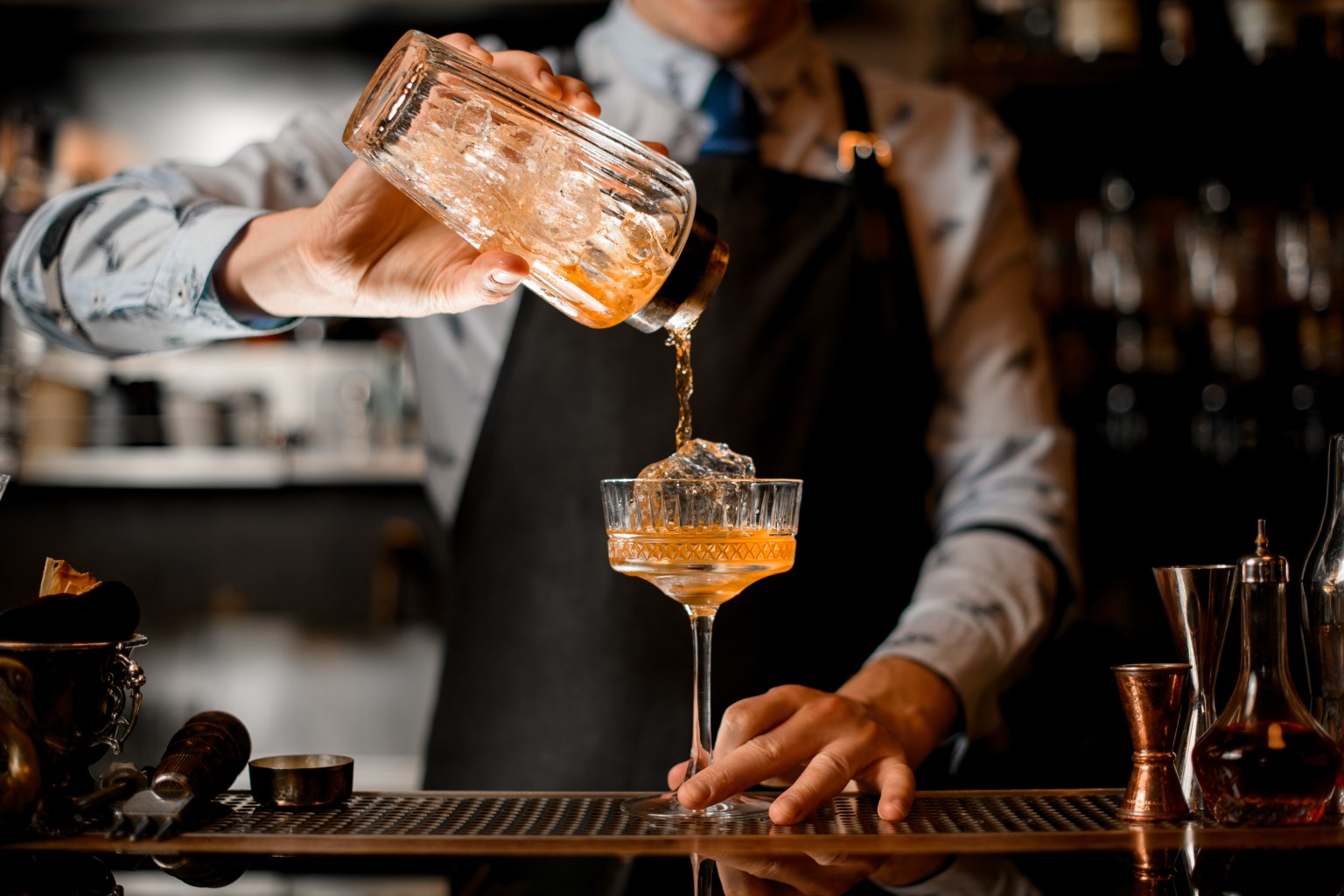
A film line turned it into a preference, and it has been treated as one ever since. It is not a preference. The two methods do measurably different things to a drink, and which one a given drink wants is decided by a single question with a yes or no answer.
Both chill and both dilute. Only one aerates.
Stirring moves the liquid past the ice steadily. The drink gets cold, it takes on water, and it stays a single clear phase.
Shaking throws the liquid and the ice against each other violently. The ice fractures, which multiplies the cold surface enormously, so the drink chills faster and takes on more water in less time. And it whips air into the liquid, which is the part that actually matters.
Those bubbles are why a shaken drink is cloudy: light scatters off them. They also make it lighter on the tongue, briefly lift its aroma, and soften the perception of alcohol.
Which gives one rule with no exceptions worth arguing about
If everything in the glass is clear and alcoholic, stir. If anything cloudy is going in, shake.
Spirits, fortified wines, liqueurs, bitters, sugar, water: stir. A Martini, a Manhattan, a Negroni, an old fashioned. These drinks are built on weight and clarity, and aerating them makes them thin, foamy and dull.
Citrus juice, any fruit juice, egg white, cream, dairy, a thick syrup: shake. A sour, a daiquiri, a margarita, anything with a foam on top. These drinks need the texture that air gives them, and stirring leaves them heavy, under-chilled and harsh.
That is the whole of it. Everything else is refinement.
Dilution is the other half and it is not incidental
Water is an ingredient with a quantity and both methods are adding it whether or not anyone is measuring.
Stirring for about thirty seconds brings a drink to roughly a fifth or a quarter water by volume. A twelve-second shake takes it further and colder, because the fracturing ice is melting much faster.
Which means shaking a stirred drink over-waters it, and the resulting Martini is pale, thin and diluted in a way that no adjustment to the recipe fixes. The cloudiness is the least of it.
It also means time is a measurement rather than a feel. Thirty seconds of stirring and twelve to fifteen of shaking are real numbers, and drinks made by people who count are more consistent than drinks made by people who stop when it feels right.
The ice is doing more than the technique is
Wet ice that has been sitting out is already at melting point and gives up water immediately. Cold, dry ice straight from the freezer chills further before it starts to dilute.
Large cubes have less surface for their volume and melt more slowly, which is what you want for stirring and for serving. Smaller or cracked ice chills faster and dilutes faster, which is what you want for shaking.
And never serve over the ice you mixed with. It is spent, wet and already melting, and it will keep diluting the drink in the glass.
Straining, and why twice
A shaken drink is full of small ice shards, and shards in the glass carry on melting. Pouring through a fine mesh as well as the shaker’s own strainer removes them, along with any fruit pulp or herb fragments.
For a stirred drink one strainer is enough, since there is nothing in it to catch.
Egg drinks need shaking twice, in a specific order
Egg white foams because agitation unfolds its proteins and they rearrange around air — the same controlled damage that makes a meringue. Cold and dilution both work against that.
So shake without ice first, hard, for a good fifteen seconds, to build the foam while the mixture is warm and undiluted. Then add ice and shake again to chill it. Some people reverse the order and strain between; both work, and skipping the dry stage is what produces a thin grey layer instead of a dense white one.
Anything carbonated is neither shaken nor stirred
Agitation drives dissolved gas out of solution, which is exactly what you spent money on.
So a highball is built in the glass: cold ingredients, cold ice, the sparkling component poured down the side last, and one gentle lift with a spoon if it needs mixing at all. The bubbles are doing four separate jobs and stirring them away costs all four. The mixer is most of the drink, which is another reason not to beat it up on the way in.
The four mistakes this explains
A shaken Martini is cloudy, over-diluted and thin, and the ice shards keep going. It is a different and worse drink, not a variation.
A stirred sour is flat, cold-but-not-cold-enough and unpleasantly sharp, because nothing softened the acid or gave it body.
A drink shaken for thirty seconds is watery. Longer is not better; the chilling has already finished and only the melting continues.
A drink built on wet ice in a warm glass starts diluting before anything else happens. Chill the glass; it costs nothing and it buys several minutes at the other end.
Without alcohol, both methods matter more
Ethanol contributes viscosity and body, so a zero-proof drink starts out thinner and needs whatever texture it can get. Shaking supplies some of it, and a drink with a little syrup or a fruit puree in it shakes into something with genuine weight.
Dilution control matters more too. A non-alcoholic drink has nothing holding the flavor up as the ice melts, so an over-shaken one goes to water faster than a spirituous one ever would. Shorter shake, bigger ice, chilled glass.
Which is the same conclusion as everywhere else in a home bar: the technique is not a flourish attached to the recipe. It is one of the ingredients, and it is the one nobody writes down.
Part of Drinks & Zero-Proof.


