Some Dishes Really Are Better the Next Day. Most of the Ones People Name Are Not.
There are five mechanisms that genuinely improve food overnight. If a dish is not running at least one of them, it is not improving, it is only surviving, and the difference is worth planning around.
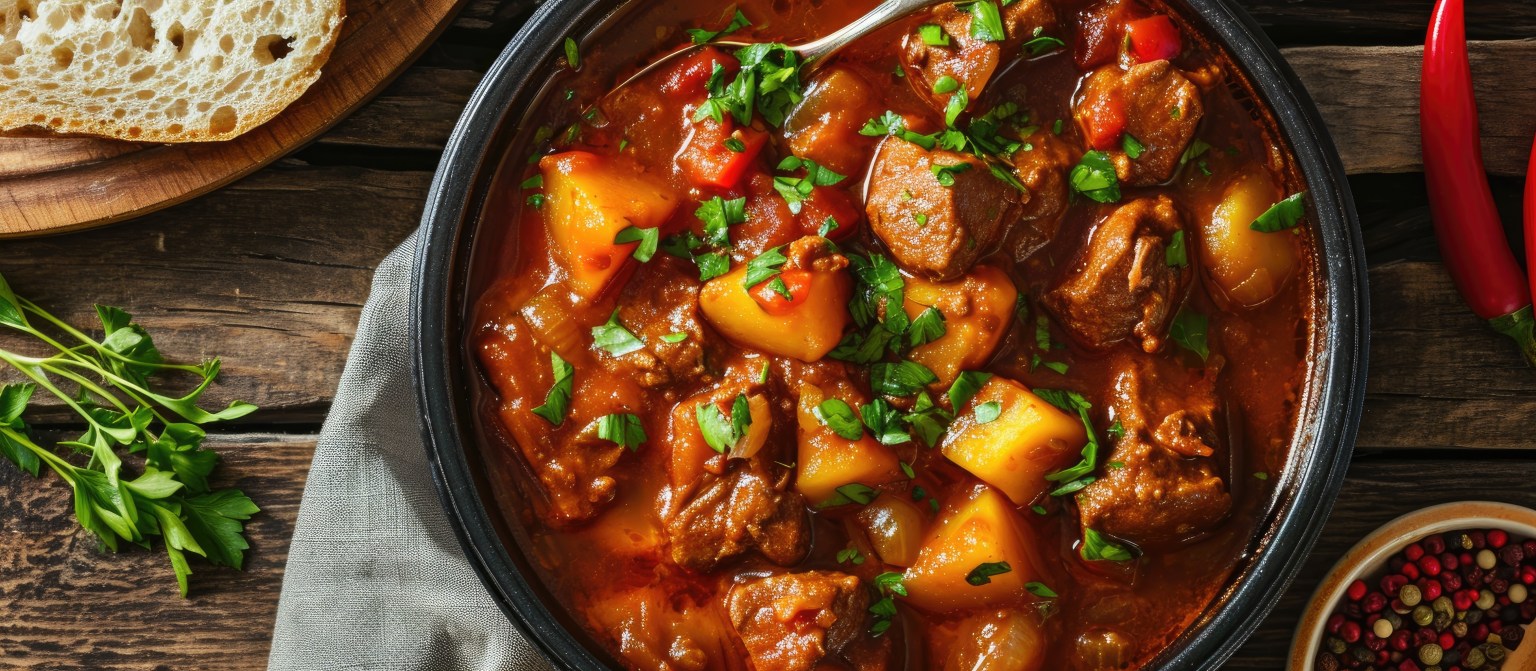
Better the next day is the most repeated compliment in home cooking and it is applied almost at random. Chili gets it. Soup gets it, all soup, indiscriminately. Someone will tell you a roast chicken is better the next day, which it is not, it is merely still good.
There is a real distinction hiding under the phrase, and it is worth having, because a dish that genuinely improves overnight is a dish you should be cooking on Sunday on purpose. A dish that merely survives is one you should be cooking in the quantity you plan to eat. Those are two different shopping lists.
Something improves overnight only if one of about five specific things is happening. If none of them is, the dish is not getting better. It is getting older, which is a different verb.
One: fat separates and you get to decide about it
In a hot pot, rendered fat is dispersed through the liquid and you are stuck with all of it. Chilled, it rises and sets into a layer you can lift off with a spoon.
That is a real improvement and it is entirely under your control. You can take all of it, half of it, or none. A stew that felt slightly greasy on the first night is often just a stew nobody had the opportunity to edit.
This applies to braises, stews, stocks, chilis, and any soup built on a fatty cut. It is the single most reliable overnight upgrade and it requires nothing of you except a refrigerator and a spoon.
Two: gelatin goes back where you wanted it
Cooling meat in its cooking liquid lets the fibers contract and take some of that gelatin-rich liquid back with them, which is the actual source of succulence in a braise.
This one has a condition attached, and it is the condition people break. The meat has to cool in the liquid. Pull short ribs out of their braise, refrigerate them on a plate, and you get the opposite result: tight, dry meat and a pot of sauce holding everything that used to be in it.
Three: fat-soluble flavor compounds spread out
This is the mechanism behind curry, chili, and almost every long-spiced dish, and it is the one that sounds like folklore and is not.
A great many aroma compounds in spices, chiles and aromatics dissolve in fat rather than water. On the first night, plenty of them are still concentrated where they started, in and around the fat they were bloomed in. Given hours, they distribute through the dish, and the result tastes less like a collection of components and more like one thing.
Which is why a curry made in forty minutes and eaten immediately can taste sharp and layered in an unpleasant way, and the same pot on Tuesday tastes rounded. Nothing was added. The contents simply finished mixing at a molecular level, on their own schedule.
Alliums move the same direction. The harsh, volatile edge of a lot of raw or barely-cooked garlic and onion softens overnight into something warmer.
Four: moisture equilibrates across a structure
Anything layered or absorbent has wet regions and dry regions when it comes out of the oven, and they even out over hours.
Lasagna is the obvious case. Fresh from the oven it is molten and slides apart on the plate. Cooled overnight and reheated, it slices cleanly and the pasta has taken up sauce it was sitting next to rather than absorbing. Casseroles, stuffing, and bread puddings all behave this way.
So do certain cakes. Carrot, banana, gingerbread, and most heavily spiced or oil-based cakes are better on day two because moisture has moved from the wetter interior toward the crumb, and the spices have done the same distribution trick as a curry. This is the exception to everything staling would predict, and it holds only because these cakes are loaded with the fat and sugar that slow retrogradation down.
Five: something needed to set
Terrines, pates, cheesecakes, custards, jellied things, and marinated salads all need time as a structural requirement rather than a flavor one. They are not better the next day. They are not finished until the next day, and serving them early is serving them unfinished.
Potato salad and slaw sit here too, with a caveat: they improve for several hours as dressing penetrates and salt does its work, then begin degrading as the vegetables release water. Their peak is that evening or the following morning, not three days out.
The dishes people insist are better and are not
Brothy soups with delicate contents are the biggest offender. Chicken noodle soup on day two is a bowl of bloated noodles in cloudy broth. The noodles kept absorbing all night and there is no undoing it. If you want that soup twice, store the broth and the noodles separately, which is the component argument in its most obvious form.
Any soup carrying green vegetables, fresh herbs, or seafood belongs to the day it was made. Fish and shellfish deteriorate in both texture and smell faster than almost anything else in the refrigerator, and no mechanism above applies to them.
Dairy-thickened soups do not improve and often split on reheating.
Potatoes in a brothy soup go grainy overnight, having retrograded while suspended in liquid, which is the worst of both worlds.
Roast chicken is still good cold and is not better. Nothing on that list is happening to it. Same for a steak, a piece of fish, a salad, and anything whose appeal was a crisp surface.
And pizza is a matter of taste, not chemistry, and anyone who tells you otherwise is describing a preference in the language of science.
Day two is usually the ceiling
Almost all of these mechanisms complete within twenty-four hours. Fat has fully separated. Compounds have distributed. Structures have set.
After that the curve turns. Vegetables keep softening past useful, textures flatten, and the dish drifts toward uniformity. The chili that was better on Tuesday is not better again on Thursday, it is just older, and a fourth-day version of anything is usually worth transforming into something else rather than reheating as itself.
On the safety side, the guidance is unfussy and worth following exactly: most cooked leftovers keep three to four days in the refrigerator, cooled quickly in shallow containers rather than left to come down slowly in a deep pot, and reheated all the way through rather than to lukewarm. Anything you will not get to inside that window should go into the freezer on the first day, while it is at its best, rather than on day three as an act of guilt.
What to do with this on a Sunday
Look at what you are planning to cook and ask which of the five mechanisms it can run.
If it is a braise, a chili, a curry, a lasagna, a terrine or a spiced cake, cook more than you need, because tomorrow’s version is the better one and that is a genuinely free upgrade.
If it is a roast, a fillet, a soup full of green things, or anything crisp, cook what you will eat and let the second dinner be a different dish built from parts, the way a planned second cooking works.
The phrase is not really better the next day. It is better once something has finished happening. Find out whether anything is still happening, and you will know which pot to make twice as large.
Part of Kitchen Systems.
Where this goes next
