A Dinner Party’s Leftovers Are a Different Problem From a Weeknight’s
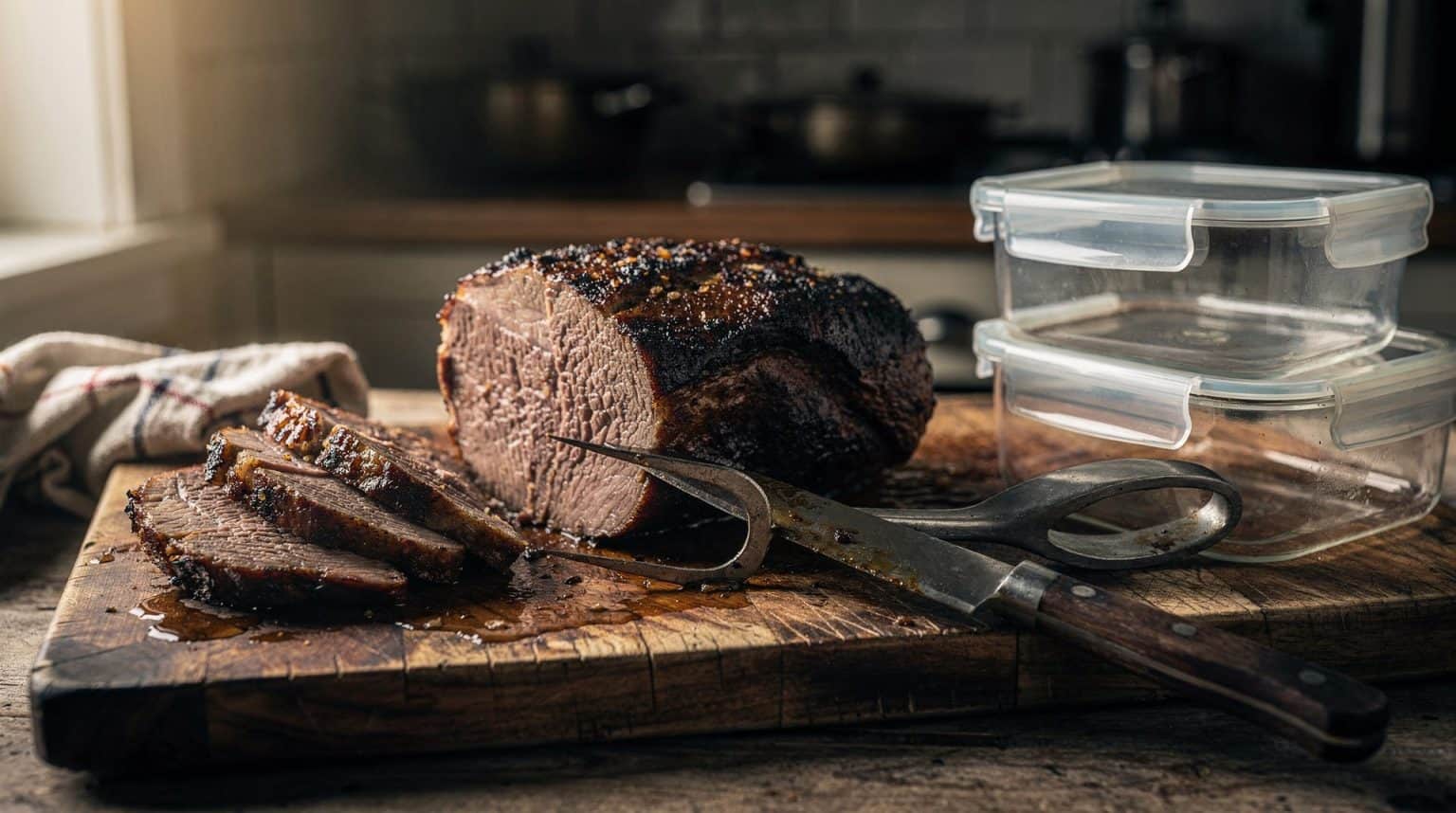
It is eleven o’clock. There are nine serving dishes on the counter, most of them half full, and every decision about them is about to be made by somebody who has been standing up since four and would like to stop.
What usually happens is that the largest things go into the refrigerator as they are, in the dishes they were served from, and the next morning there is a shelf of cold platters that nobody can face and that mostly get thrown away by Wednesday.
Party leftovers are not weeknight leftovers in larger quantity. Three things make them a different problem, and two of the three can only be solved before the guests arrive.
The clock started when the food went on the table
Food held between refrigerator temperature and hot is in the range where bacteria multiply fastest, and a platter that went out with the drinks and was still there at the end of dinner has been in it for hours.
That is the part tiredness is worst at judging. The food looks exactly as good at eleven as it did at seven, and it is not in the same condition at all. Not everything deserves a container, and the decision is not about waste; it is about what the evening already spent.
The practical line most guidance gives is about two hours at room temperature, four in a cool room, and the count does not restart in the refrigerator. Anything that sat out through an entire evening is a plate to scrape rather than a container to fill.
Which is why the triage happens before you sit down
The move that solves nearly all of this takes ninety seconds and happens while you are plating: put a portion of anything worth keeping into a clean container and into the refrigerator before it ever reaches the table.
It is out of the warm zone from the start. It has not been served from, breathed over, or had a spoon in it that went everywhere else on the table. And it is the portion you actually wanted, chosen while you were still capable of choosing.
The same logic applies one step earlier, in the cooking. Holding some of it back slightly underdone means the reserved portion arrives correct on Tuesday rather than twice-cooked.
The serving dish is the wrong container in both directions
A deep dish of anything hot is the worst case. It holds heat for hours, and covered and put straight into a cold refrigerator it stays in the warm range in the middle for a long time while warming everything around it. A deep pot takes most of the night to cool, and a covered casserole behaves the same way.
A shallow platter cools quickly, which is better, but it has been exposed and handled for the whole evening, which is worse.
So everything gets broken down into shallow containers before bed rather than in the morning. It is ten minutes of work at the worst possible time, and it is the difference between food that is good on Sunday and food that is technically still there.
Some of it is simply finished, and saying so is not waste
A dressed salad is finished. A cheese board that spent four hours at room temperature is finished as a board, though the ends are still an ingredient if they are wrapped properly tonight. Anything that was dipped into is finished. Anything with a communal spoon in it that also went into three other dishes is finished.
Bread, oddly, is not. Stale bread is a better ingredient than fresh, and the basket that went round the table is tomorrow’s crumbs, croutons or panzanella.
And the open bottles are not finished either. Half a bottle of wine is an ingredient, and a frozen cube of it is an ingredient with a shelf life.
What to send home with people, and how to do it well
Send the things that will not keep and that you have no plan for, rather than the things you were looking forward to.
Send them in something you do not want back, which removes the entire social apparatus of returning a dish. Ask before loading anyone up, because a container of food is an obligation as well as a gift and not everyone wants one.
And do not send anything that spent the evening on the table. Whatever the rule is for your own refrigerator, it is stricter for somebody else’s.
Plan one dish for the next day and the rest sorts itself out
The morning after a party is the single best raw-material day of the year, and it is wasted more often than any other because there is no plan for it.
One decision is enough. Roast meat becomes sandwiches with the mustard and pickles that are already out. Vegetables and cheese ends become a frittata. A braise becomes a pasta sauce. Bread and the last of the herbs become a panzanella. Everything else follows from having one thing to aim at.
What it should not be is the same meal again on a smaller scale. Move it along one axis — temperature, format, cuisine or texture — and it arrives as a meal rather than as evidence.
The rule about which dishes are worth the effort holds here too: some things genuinely improve overnight and most of the ones people name do not, so put the effort into the braise and let the roasted vegetables be lunch.
The freezer takes the surplus, if it is packed tonight
A party produces more of some things than a household can eat in three days, and that is exactly what the freezer is for — provided it goes in flat, labeled, and in portions somebody will later want.
An unlabeled tub is compost with extra steps, and the eleven o’clock version of you is the one most likely to produce one.
The ten minutes before bed
Two things, and they are the only two that cannot wait.
Get everything out of deep dishes and into shallow containers, uncovered until it stops steaming, then covered and refrigerated. And write on them — what it is and tonight’s date — because tomorrow morning nothing in there will be identifiable and every unlabeled container is a decision you have postponed rather than made.
Everything else can be done with coffee in hand. The counter can stay as it is. But those two, tonight, are what decide whether the best food of the week gets eaten or gets carried out on Wednesday.
Part of Kitchen Systems.


