A Salad Is a Structure, and the Dressing Is the Last Thing That Happens to It
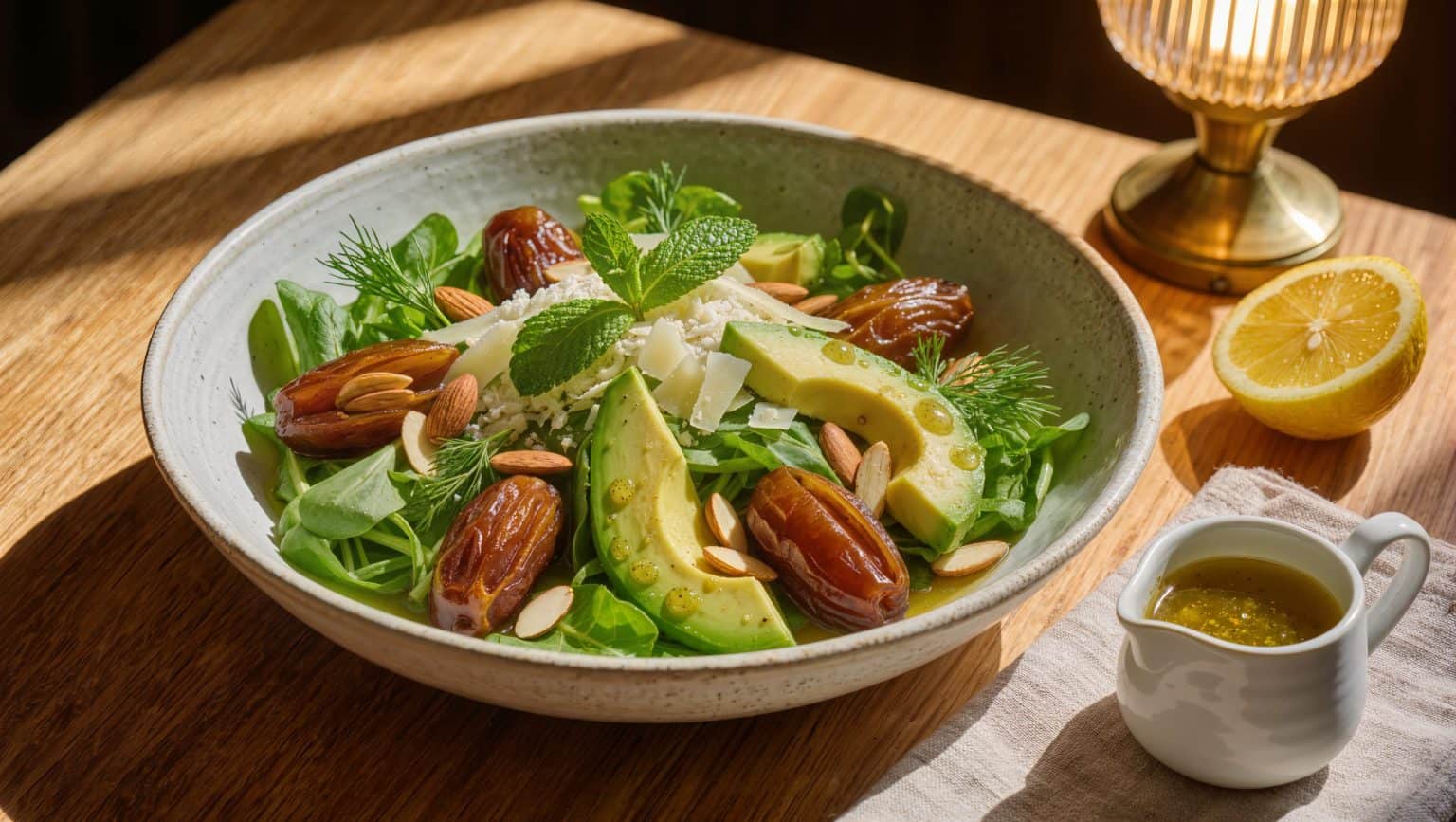
The one in the restaurant is evenly glossy, every leaf coated, nothing pooling. The one at home is half-dressed leaves sitting above a tablespoon of vinaigrette in the bottom of the bowl, and the usual conclusion is that they used more dressing.
They used less. What they did differently happened before the dressing was anywhere near it.
A wet leaf cannot hold oil
Oil and water do not mix, so a leaf carrying a film of rinse water sheds oil-based dressing immediately. It runs off and collects at the bottom, taking the seasoning with it.
Which makes drying the leaves the single highest-return step in the whole operation, and the one most often skipped because it feels like fussing. A spinner, and then — if there is time — a few minutes spread on a towel. Dry to the touch, not damp.
Do that and the same quantity of dressing coats roughly twice as much salad.
Dress the bowl, not the salad
Dressing poured over the top of a full bowl lands on the leaves at the top and never reaches the rest, and stirring afterward bruises everything trying to move it around.
Put the dressing in the bottom of a bowl considerably larger than the salad. Add the leaves on top. Then lift and turn with your hands from underneath, repeatedly, for longer than feels necessary — half a minute at least. Hands beat tongs, which tear.
The bowl should be big enough that the leaves can move. A salad tossed in the bowl it will be served in is almost always under-tossed.
Salt does not dissolve in oil
This is why a salad can taste under-seasoned however much dressing is on it.
Salt dissolves in the acid, not in the fat, so it goes into the vinegar or lemon juice first and gets whisked until it has gone. Salt added to a finished vinaigrette sits as undissolved grains and lands unevenly.
A small extra pinch directly over the leaves after tossing is also legitimate and is what most home salads are missing.
The ratio, and the thing that makes it cling
Three parts oil to one part acid is the starting point, and it moves with the acid — a sharp vinegar wants more oil, a mild one or a lemon wants less. It is one of the five ratios worth knowing and the only one most people use weekly.
What turns it from two liquids into a dressing is emulsification. An emulsified dressing sheets across the leaves rather than running off them, and it needs something to hold the droplets apart: mustard, honey, a little egg yolk, a spoonful of yogurt, or simply hard whisking that will hold for a few minutes.
Mustard is the default for a reason. It emulsifies, it seasons, and it is already in the refrigerator.
Timing splits the leaves into two groups
Salt and acid draw water out of plant cells, so a delicate leaf dressed early collapses. Lettuce, spinach, herbs and anything soft get dressed at the table, in the last thirty seconds.
Sturdy leaves do the opposite and improve with time. Cabbage, kale, chicory, radicchio, fennel and carrot all want ten to thirty minutes in the dressing, which softens them and takes some of the harshness out with the liquid. Salting a shredded brassica and leaving it is the whole method behind a slaw that is not watery an hour later.
Massaging kale is the same operation performed mechanically, and it is the reason a kale salad works at all.
Four things, and only one of them is a leaf
A salad that feels like a dish rather than a garnish generally has four components.
Leaves, ideally two kinds — one soft and one with structure or bitterness.
Something crunchy that is not a leaf. Toasted nuts, seeds, croutons, raw fennel, radish, celery. Toasting the nuts is two minutes and it is the difference between texture and flavor.
Something rich. Cheese, avocado, egg, bacon, a fatty fish. Without it, a salad is acid and water and it does not hold anybody’s attention.
Something sharp or sweet. Pickled onion, capers, olives, dried fruit, citrus segments — a punctuation mark that is stronger than the dressing.
Miss the crunchy one and it reads as limp. Miss the rich one and it reads as a side dish regardless of size.
A composed salad is assembled, not tossed
Once there are grains, beans, roasted vegetables or a protein involved, tossing everything together in one bowl produces mush and a grey dressing.
Dress the components separately. Grains and beans go into dressing while still warm, because they absorb it rather than being coated by it and they are better for the wait. Roasted vegetables get their own oil and acid. The leaves get dressed last and lightly, and everything is layered rather than stirred — heavy and wet at the bottom, leaves and crisp things on top.
That order is also what makes a salad survive being carried: a lunch box is a sealed humid environment and a tossed salad in one is finished by eleven.
Temperature is a seasoning decision here too
Leaves want to be cold and crisp. Everything else — cheese, tomatoes, roasted vegetables, beans — tastes of far more at room temperature, and cold suppresses salt and aroma both.
So the components come out of the refrigerator early and the leaves come out last, which is the opposite of how most salads are assembled. Almost nothing on a table is served at the temperature it was made for, and a fridge-cold tomato is the most-wasted ingredient of the summer.
And the leaves you were about to throw out
Limp is usually thirst rather than decay. Twenty minutes in cold water brings most greens back to the point where they are worth drying and dressing.
Which is the last argument for doing all of the above in order: the salad is not a thing you assemble at the end because dinner needed a vegetable. It is four decisions, it takes ten minutes, and nine of those minutes are things that can happen before anyone is hungry.
Part of Recipes & Technique.


