Every Custard Is the Same Two Decisions: How Much Egg, and How Hot
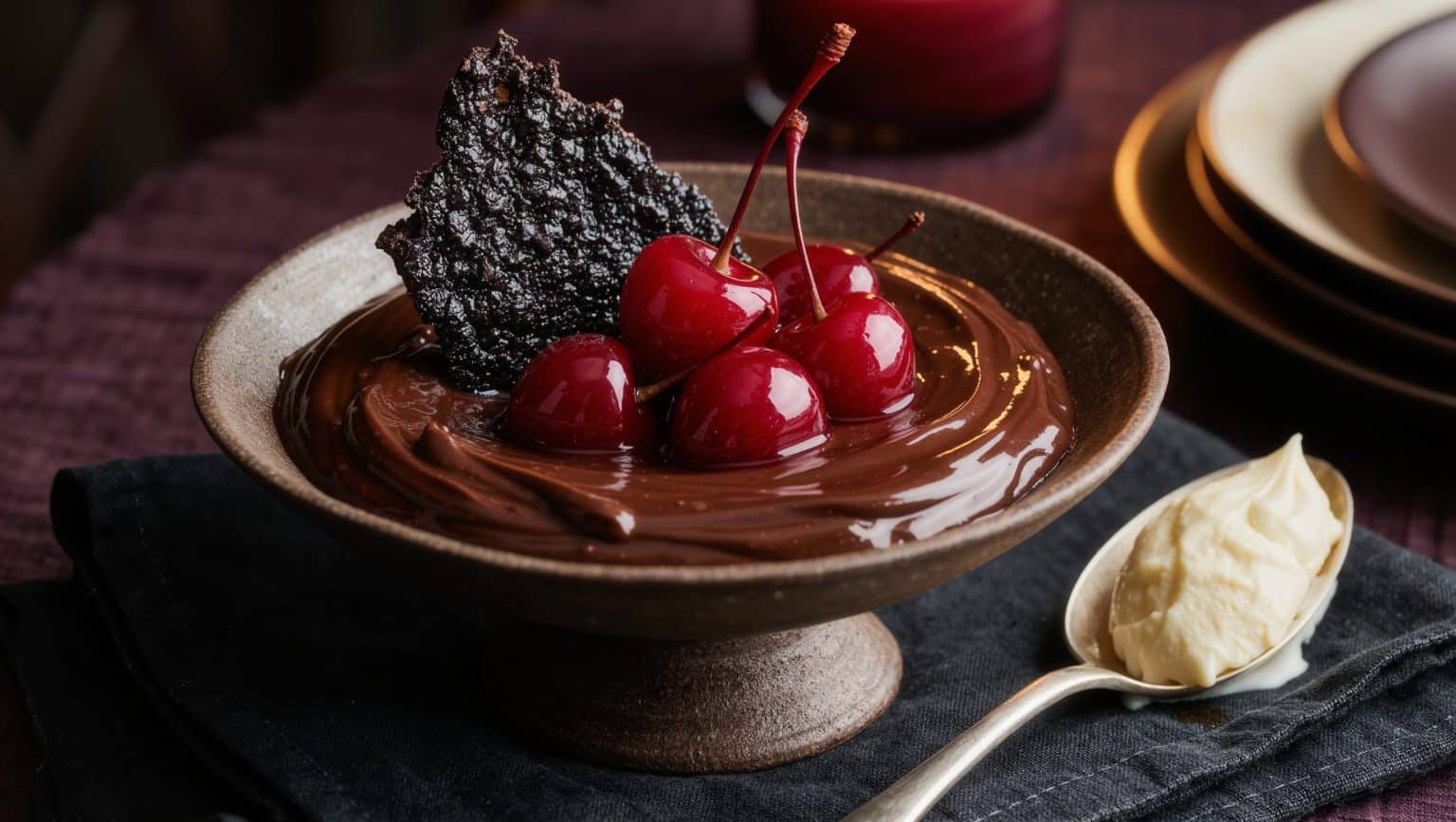
A pouring sauce, a quiche, a flan, an ice cream base, a lemon curd, a pot de creme, the savory filling in a tart. Seven recipes in four sections of a cookbook, and they are one technique with two dials on it.
Learning them separately is why custard feels like an advanced subject. Learning the two dials takes a page, and after that the only question about any custard is where the dials are set.
A custard is protein building a net around liquid
Egg proteins are folded up in their raw state. Heat unfolds them, they bond to each other, and the mesh they form traps the liquid around it. That is the whole mechanism, and everything else is a consequence.
More egg means a denser mesh and a firmer set. More liquid means a looser one. Push it too far and the proteins keep bonding to each other, tighten, and squeeze the liquid out — which is curdling, and it is not a different event from setting. It is the same event, continued.
Whites set firmest and go rubbery fastest. Yolks set more softly and bring fat and emulsifiers, which is why yolk-heavy custards are silky and white-heavy ones are springy. The egg is doing one of its six jobs here and it is worth knowing which.
Dial one: the ratio decides the texture, and it is not a long list
Roughly, one whole egg sets about a cup of dairy into something soft and barely sliceable. That is the middle of the range and the useful anchor.
Fewer eggs per cup gives a sauce that coats a spoon and never sets — a pouring custard. More eggs per cup gives something firm enough to unmold and slice. Yolks only, at the same total volume, gives a richer and more tender set; whole eggs give more structure.
Which is the entire difference between a creme anglaise, a pot de creme and a flan. Nobody needs to memorize three recipes; they need one ratio and a direction to move it in.
Fat and sugar both widen the margin. Sugar raises the temperature at which the proteins set, and so does fat, which means a rich sweet custard is considerably more forgiving than a lean one. A quiche made with cream behaves better than the same quiche made with milk, and that is chemistry rather than indulgence.
Dial two: the window is a few degrees wide
Diluted with dairy and sweetened, most custards set somewhere in the region of 175°F to 180°F, and curdle only a handful of degrees above that.
Which is why eggs do not have a cooking time, they have a temperature, and why every traditional instruction about custard is really an instruction about not overshooting: low heat, constant stirring, a thermometer if you own one, and off the heat at the first sign of thickening.
The spoon test works because it reports viscosity, which tracks the set: dip a spoon, draw a finger through the coating, and a line that holds its edges means the proteins have begun to net.
Tempering prevents a local accident, not an average one
Pouring hot dairy straight onto eggs does not overheat the mixture as a whole. It overheats the part the stream lands on, instantly, and scrambled egg that has already formed does not un-form when the rest catches up.
So add a little of the hot liquid to the eggs while whisking, then a little more, then return the lot to the pan. It is not ceremony; it is keeping any part of the bowl from reaching the curdling point on its own.
Then strain it, every time. There will be a few threads of set egg and a chalaza or two, and straining takes four seconds and is the difference between silky and nearly silky.
Starch is the cheat code and it changes the rules completely
Add a spoonful of cornstarch or flour and the custard can be boiled without curdling. The starch granules physically interfere with the egg proteins bonding to each other, and they also thicken on their own.
That is what separates a pastry cream and a lemon curd from a creme anglaise: not the flavor, but whether there is starch in it. A starch custard must actually come to a boil for the starch to thicken and for the enzyme in the yolk that would thin it later to be destroyed — so the instruction to boil pastry cream for a full minute is not a safety margin, it is the recipe.
If custard makes you nervous, put starch in it. There is no shame in a technique that cannot break.
The baked kind is the same custard with the heat moderated
A water bath does not add moisture in any meaningful way. It buffers the temperature: the water cannot exceed its boiling point, so the outside of the dish is held well below oven temperature and the custard cooks gently and evenly.
Without it, the edges are set and weeping while the center is still liquid, because the gradient from the outside inward is far too steep. With it, the whole dish arrives together.
Judge it by the jiggle, not the clock. The center should move as one soft mass when the dish is nudged, not ripple like liquid and not sit still. It carries on setting as it cools, so a custard baked until firm is a custard that will be firm and weeping by the time it is served.
Curdled is sometimes recoverable
A just-broken stirred custard can often be brought back by pulling it off the heat instantly, adding a splash of cold cream, and hitting it with an immersion blender before straining. The mesh is broken up mechanically and the emulsion re-forms.
Thoroughly scrambled is finished. The proteins have squeezed out the liquid and no amount of blending puts it back.
Savory custards are not a different subject
Quiche is a custard in a pastry case. Chawanmushi is a very lean one, steamed. The binding in a gratin, a savory tart, a bread pudding, a strata — all the same two dials, with salt and stock instead of sugar and vanilla.
Savory ones are usually leaner, which makes them less forgiving, which is why a quiche that weeps was almost always baked too hot rather than too long. And if it is being eaten cool, it needs more salt than it did warm.
And an ice cream base is a custard with a second problem
Made the same way, judged by the same window, and then handed to a freezer where the sugar concentration decides whether it scoops or sets into a brick.
Which means the ratio is being set by two requirements at once, and it is the only custard where the sugar quantity is not really about sweetness at all.
Everything else on the list is one bowl, one pan, two decisions. Set the ratio for the texture you want, hold the temperature under the line, and the seven recipes collapse into one.
Part of Recipes & Technique.


