The One Drink and the No-Drink
Almost Every Good Drink Is a Sour, a Highball or an Old Fashioned
There are thousands of cocktail recipes and roughly three shapes. Learn the three and the recipes become variations you can improvise instead of instructions you have to own a book for.
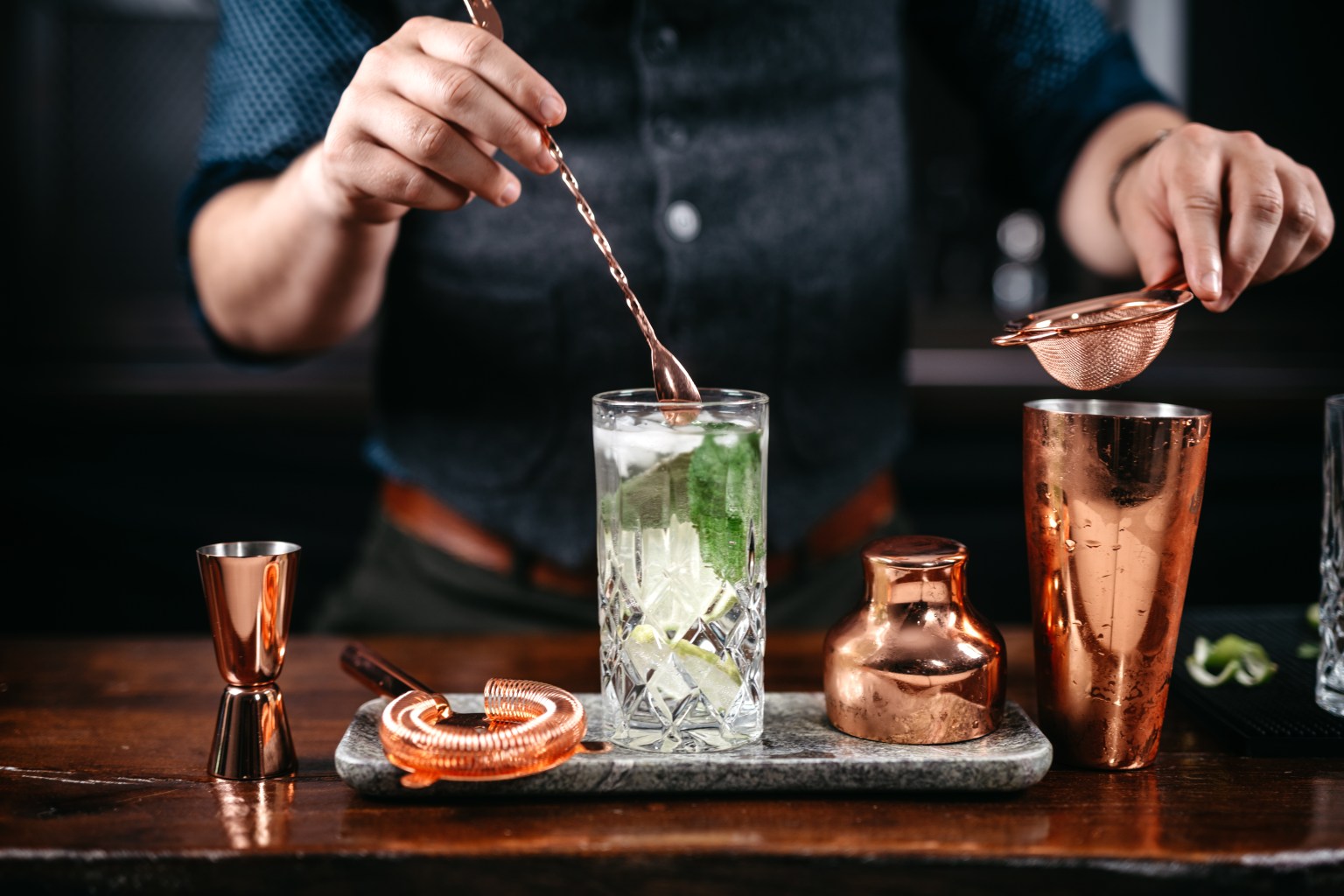
A cocktail list looks like a vocabulary problem. Hundreds of names, each with its own ratios, half of them requiring a bottle you do not have.
Underneath, nearly all of it is three structures. Learn the structures and a recipe stops being a thing to follow and becomes a variation you can hear described and reconstruct, which is also the only way to make a good drink out of what is actually in the house.
The same three work with no alcohol in them at all, which is the more useful fact.
The sour: something strong, something sour, something sweet
Two parts spirit, one part citrus, three quarters of a part syrup, shaken hard with ice and strained. Change the spirit and the name changes: whiskey makes a whiskey sour, gin and a little more sugar makes something close to a Tom Collins before the soda, rum and lime makes a daiquiri, tequila with orange liqueur standing in for part of the sugar makes a margarita.
It is one drink with a wardrobe.
The structure works because sourness and sweetness suppress each other, which means the balance point is a ratio rather than an amount. A drink can be both quite sour and quite sweet and taste like neither, and that tension is what makes a sour feel lively where a merely sweet drink feels heavy.
The adjustments worth knowing: lemon is sharper and reads as cleaner, lime is more aromatic and slightly bitter. A richer syrup (two parts sugar to one water) adds body without adding volume. An egg white or a spoonful of aquafaba turns it into a silky version of itself, held up by a protein foam built by the shaking.
And the sour is shaken rather than stirred because it can absorb the water. A quarter of the final volume arriving as melt is correct here in a way it would not be for a drink of nothing but spirits.
The highball: something strong, something long, over ice
One part spirit to two or three parts a carbonated mixer, built in the glass, never stirred hard. Gin and tonic. Whiskey and soda. Rum and cola. Campari and soda. Vermouth and tonic.
It is the simplest structure and the one most often made badly, because every failure is a temperature failure. Carbon dioxide leaves solution as things warm, so a highball built in a warm glass over wet ice with a room-temperature mixer is flat before it reaches the table.
Chill everything. Fill the glass completely with ice, which sounds like more dilution and is less — a full glass of cold ice melts slower than three cubes swimming in liquid. Pour the spirit first, the mixer down the side, and lift once with a spoon if at all.
This is also the most adaptable of the three, because the long part can be anything carbonated: tonic, soda, ginger beer, sparkling cider, a dry sparkling wine, kombucha. The last of those brings acidity and a faint bitterness along with the bubbles, which is why it is the most useful mixer in a house that is not drinking.
The old fashioned: something strong, something sweet, something bitter
Two ounces of spirit, a teaspoon of sugar or syrup, a few dashes of bitters, stirred over ice until cold, poured over one large cube, with a strip of citrus peel expressed over the top.
No citrus juice, no mixer, no dilution beyond what the stir provides. It is the structure for anything where the base is the point — a good whiskey, a rum worth tasting, an aged tequila.
What makes it work is the third element. Sugar alone makes a spirit rounder and slightly dull. Bitterness gives the drink somewhere to end, which is why two dashes of something bitter change the whole architecture and why the family it belongs to — Negroni, Manhattan, Boulevardier — are all versions of the same trade between sweet and bitter around a strong center.
The peel is not decoration either. Squeezing it over the surface sprays citrus oil across the drink, which is aroma without acidity, and aroma is most of what you taste.
The three problems, and which structure solves which
Once the shapes are clear, choosing between them is a question about the occasion rather than the bottle.
Something refreshing, over a long evening, that nobody has to think about: highball. Low in alcohol by volume, cold, easy to make ten of.
Something bright to start with, or alongside rich food: sour. The acid does the same job at the table that acid does anywhere else.
Something slow, after dinner, that rewards attention: old fashioned. Strong, aromatic, and finished by bitterness rather than by sugar.
All three work with nothing in them
The structures earn their keep on zero-proof, because a zero-proof drink fails at the end and the templates tell you exactly which end you are working on.
The zero-proof sour is the easiest of the three, because the acid and the sugar were always doing most of the work. Strong cold tea or a spiced syrup in place of the spirit, citrus, syrup, aquafaba for texture. The thing to add is something with length — a bitter, a strong black tea, a splash of vinegar shrub.
The zero-proof highball is nearly free. A flavorful non-alcoholic base, a good tonic or kombucha, ice, done. Tonic brings quinine, which is genuine bitterness, and is the single most useful thing behind a zero-proof bar.
The zero-proof old fashioned is the hard one and the honest test, because the structure is nothing but strength, sweetness and bitterness, and the strength is what is missing. It has to be rebuilt from concentration: a heavily reduced tea or coffee, a smoked or spiced syrup, non-alcoholic bitters, and salt. It can be done and it is the drink that tells you whether a zero-proof bar is serious.
What to keep so that all three are always available
Something strong, alcoholic or not. Lemons and limes. A jar of simple syrup, which is sugar and hot water and nothing else and keeps for weeks. A bottle of bitters. Soda water and tonic. Good ice.
That is the whole bar. Everything else — the amaro, the vermouth, the second syrup, the shrub — widens the range without changing the three shapes underneath.
And the ratios are worth committing to memory in the same way a cook remembers a vinaigrette: two to one to three quarters for the sour, one to three for the highball, two to a teaspoon to two dashes for the old fashioned. From there you are adjusting rather than following, which is the point.
Part of Drinks & Zero-Proof.


