Crisp Comes From One of Three Mechanisms and They Do Not Want the Same Things
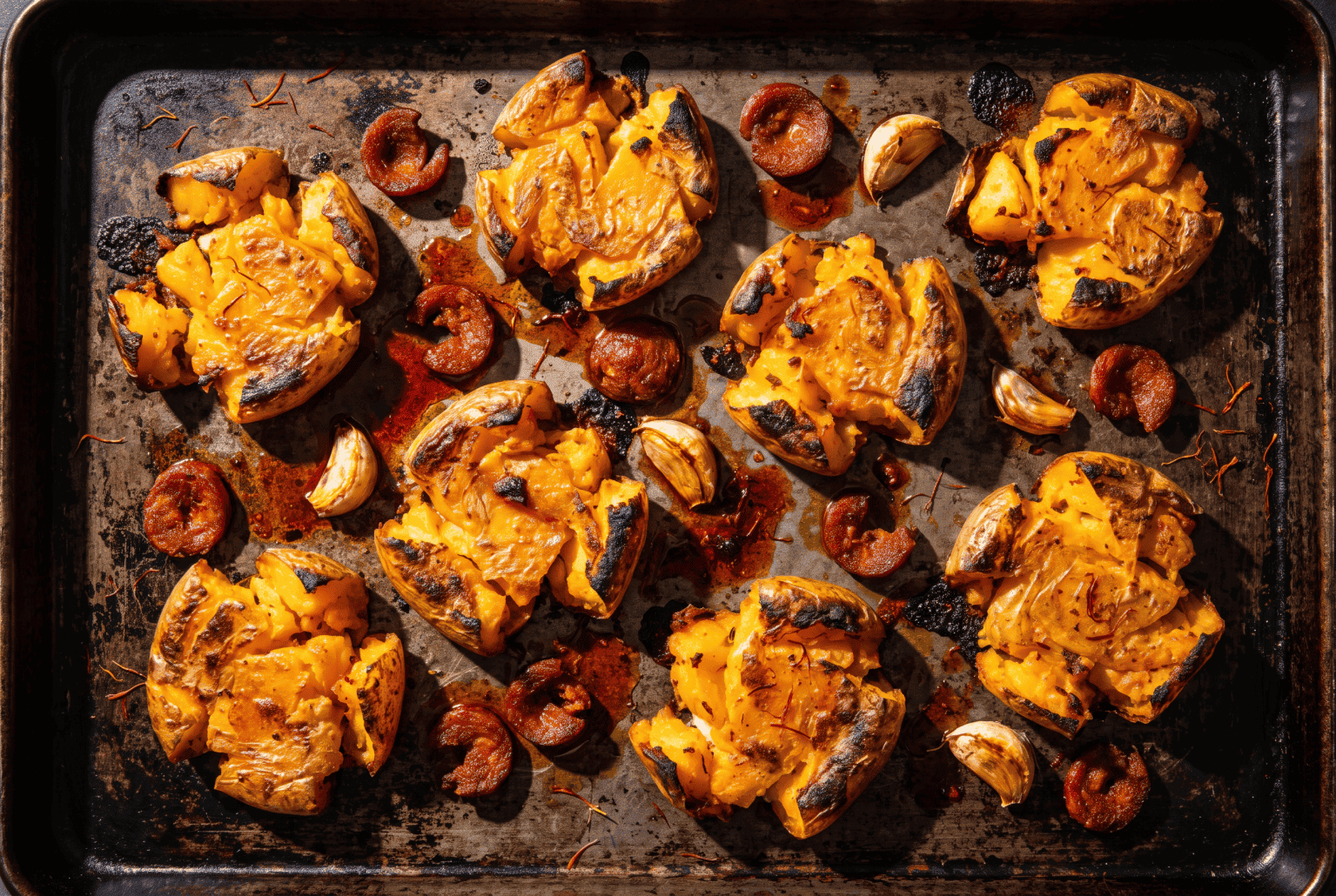
Crisp is the texture people miss most in home cooking and the one they achieve least often. It is also not one thing: there are three separate ways to produce it, they have different requirements, and using the technique for one while expecting the result of another accounts for most of the disappointment.
What crisp physically is
A crisp surface is a brittle, rigid, low-moisture solid that fractures rather than bending. Every mechanism below is a different route to the same state, and all three are fundamentally about getting water out of a thin outer layer and keeping it out.
Which gives one rule that governs everything: water is the enemy, at every stage, including after the food is cooked.
One: dry heat drives the water out of the food’s own surface
Roasting, baking, grilling, a hot dry pan. The surface dehydrates and then browns, and what is left is the food’s own structure, rigid.
This is the slowest of the three and the most easily sabotaged, because it needs the evaporating water to leave. A crowded tray traps its own steam and nothing on it will ever crisp, no matter how high the oven goes. Until the surface is dry it cannot get past the temperature of boiling, and crisping happens well above it.
So: space, airflow, a hot dry surface, and no lid. Chicken skin, roast potatoes, roasted vegetables and bread crusts are all this mechanism.
Two: a coating that sets into a rigid shell
Dredge, batter, breadcrumb, or a dusting of starch. Here the crisp layer is not the food at all — it is something applied to the outside that dries and hardens independently of whatever is underneath.
That matters because it works for wet things. A piece of fish will never crisp its own surface in the time it takes to cook; a thin coat of starch will.
Which starch matters. Cornstarch, rice flour and potato starch produce a more brittle, glassier shell than wheat flour, because wheat flour forms gluten when it hydrates and gluten is elastic rather than brittle. A mix of wheat flour for adhesion and cornstarch for texture is the usual compromise.
Breadcrumbs are a variant of the same idea with texture built in, and stale bread makes better ones because it has already lost the water you would otherwise have to drive off.
Three: hot fat, which is the fast and violent version
Oil transfers heat many times faster than air does, so the water in the surface layer flashes to steam and leaves in seconds rather than minutes. An oven at 350 and oil at 350 are not doing remotely the same thing.
The bubbling is the instrument: large violent bubbles mean water is still leaving, and small quiet ones mean it is nearly done. Frying is finished when the bubbling calms, not when a timer says so.
It is also the mechanism most sensitive to temperature recovery, which is why small batches matter and why the oil has to climb back between them.
Two-stage methods exist because one stage is not enough
Parboiling potatoes before roasting gelatinizes the starch at the surface and roughs it up, creating far more area to dry and brown. Shaking them in the pan afterward is not folklore; it is manufacturing surface.
Double-frying works because the first, cooler fry cooks the interior and drives out moisture, and the second, hotter one crisps a surface that is now dry enough to crisp. One fry has to do both jobs at one temperature and does neither well.
Soaking cut potatoes in cold water removes surface starch that would otherwise burn, and which potato you started with decides whether any of it works.
Alkalinity is the cheat nobody mentions
A small amount of baking soda raises the pH of the surface, which speeds browning considerably and helps break down pectin so the exterior roughens.
It is why a pinch in the parboiling water produces better roast potatoes, and why it appears in recipes for crisp chicken wings. The dose is tiny and the margin is narrow — too much and everything tastes faintly of soap.
Four things destroy crisp after it has been achieved
Trapped steam. A crisp thing on a plate is sitting on its own condensation within a minute. A wire rack, not a plate, and never a cover.
Sauce applied early. Anything wet goes on at the table, or underneath rather than on top.
Salt at the wrong moment. Salt draws moisture to the surface, so it goes on immediately after cooking, when the surface is hot enough that the moisture flashes off, rather than a few minutes before.
Time. Crisp is a deadline rather than a property, and a dish built on it has a service window measured in minutes.
What is never coming back
Fried food reheated in a microwave, because a microwave heats the water and the steam has nowhere to go. The choice is to crisp it with dry heat or to accept it as something else, and a lunchroom usually offers neither.
Anything sauced the night before. Anything with a thin coating over a very wet interior, which will always steam itself from the inside.
And anything crowded, at any stage, by any mechanism. If there is one line worth keeping from all of this, it is that crispness is a question about where the water went, and a full pan is a pan where it has nowhere to go.
Part of Recipes & Technique.


